Ignazio Silone? Gwenda David? Eric Mosbacher? William Weaver? Anonymous?
Question for Quote Investigator: Thinkers have attempted to analyze and explain the rise of fascism in Germany and Italy. An Italian writer suggested that the failure of left-wing revolutionary movements catalyzed the emergence of fascism. Here is the pertinent quotation:
Fascism is a counter-revolution against a revolution that never took place.
This statement has been attributed to Ignazio Silone (pseudonym of Secondino Tranquilli). Would you please help me to find a citation?
Reply from Quote Investigator: Ignazio Silone left Italy and lived in exile during the 1930s. He wrote “La scuola dei dittatori” while residing in Switzerland. This work was translated into English by Gwenda David and Eric Mosbacher and published under the title “The School for Dictators” in 1938.1 After a long delay a definitive Italian edition finally appeared in 1962.2 Silone discussed the revolutionary tumult in Italy which led to the ascendance of fascism when Benito Mussolini gained power. Below is an excerpt in English and Italian with boldface added by QI:
Subsequent developments and complications must not cause us to overlook the essential fact that Fascism is a counter-revolution against a revolution that never took place.
Gli sviluppi e le complicazioni successive non devono però farci dimenticare questa verità iniziale: il fascismo è stata una controrivoluzione contro una rivoluzione che non ha avuto luogo.
Below are additional selected citations in chronological order.
In 1939 “More Books: The Bulletin of the Boston Public Library” published a review of “The School for Dictators” which included the following passage:3
“Fascism is a counter-revolution against a revolution that never took place,” Signor Silone writes, in examining the peculiar conditions which have made the totalitarian state possible and favor its survival and expansion.
In 1948 by Sydney H. Zebel of Rutgers University published “A History of Europe Since 1870”. A chapter on Italy included the following:4
It was now that Fascism appeared as the solution for their problem, but it is important to note that the real danger from the Left was gone even before that movement emerged from obscurity. As one anti-Fascist exile wrote. Fascism was “a counterrevolution against a revolution that never took place.”
In 1963 a revised English edition of “The School for Dictators” by Ignazio Silone appeared with a new translator William Weaver. The word “is” was changed to “was” within the quotation:5
The subsequent developments and complications mustn’t make us forget this initial truth: Fascism was a counter-revolution against a revolution that never took place.
The new edition of “The School for Dictators” was reviewed in “Masterplots 1964 Annual”, and the reviewer reprinted the quotation:6
Characterizing the Fascist movement, he calls it a “counter-revolution against a revolution that never took place.” It was born, he tells his listeners, of the anxiety of the middle class which saw its position threatened by technical progress, the disillusionment of members of the working class crushed in ill-organized attempts to seize control, and the capitalists’ fear of expropriation of their wealth.
In 2000 “The New Penguin Dictionary of Modern Quotations” edited by Robert Andrews contained the following entry:7
Ignazio Silone (1900-78)
Italian Novelist and Journalist
Fascism was a counter-revolution against a revolution that never took place.
The School for Dictators, ch. 4 (1938)
In conclusion, Ignazio Silone deserves credit for this quotation. He wrote it in Italian in “La scuola dei dittatori” (“The School for Dictators”) which was translated into English and published in 1938. This memorable statement caught the eye of other critics and observers. For example, a book reviewer in 1939 reprinted the quotation in a bulletin published by the Boston Public Library.
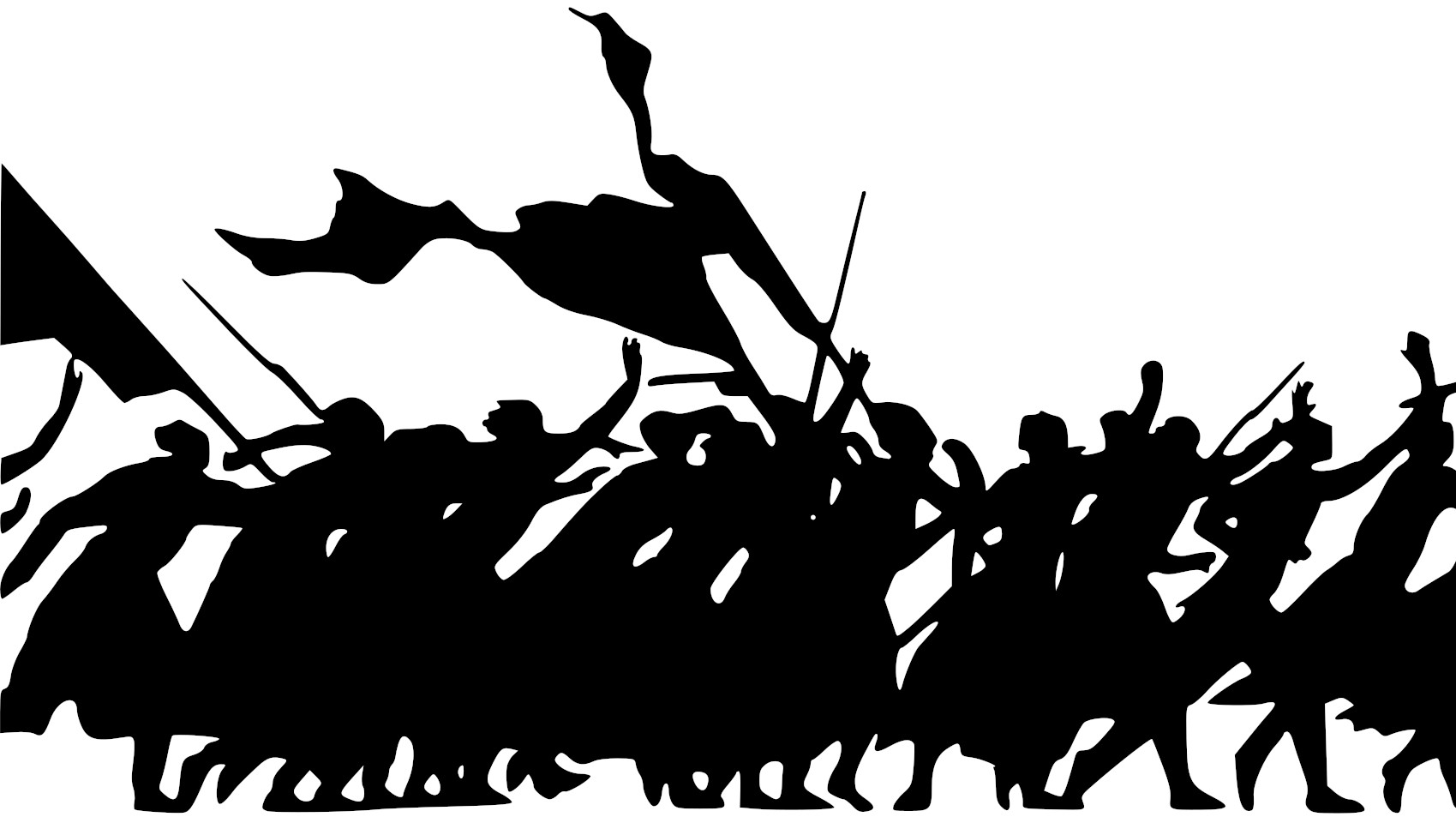
Image Notes: Illustration representing a revolutionary crowd from Clker Free Vector Images at Pixabay. The image has been cropped and resized.
Acknowledgements: Great thanks to Marion Boddy-Evans, LoriB, Aaron Rupar, and Wepdallas whose discussion thread led QI to formulate this question and perform this exploration. Wepdallas pointed to Ignazio Silone.
- 1938, The School for Dictators by Ignazio Silone, Translated from Italian to English by Gwenda David and Eric Mosbacher, Section: VIII The peculiar conditions which have made Fascism and National-Socialism possible in our time and which at the same time favor their survival and expansion, Character: Thomas The Cynic, Quote Page 121, Harper & Brothers Publishers, New York. (Verified with scans) ↩︎
- 1962 Copyright, La scuola dei dittatori by Ignazio Silone, Section: IV Schema d’un colpo di stato dopo una rivoluzione mancata (Outline of a coup d’état after a failed revolution), Character: Tommaso il Cinico (Thomas the Cynic), Quote Page 32, Arnaldo Mondadori Editore. Milano. (Verified with scans) ↩︎
- 1939 February, More Books: The Bulletin of the Boston Public Library, Volume 14, Number 2, (Review of “The School for Dictators” by Ignazio Silone, Quote Page 68, Published by the Trustees, Boston, Massachusetts. (Verified with scans) ↩︎
- 1948 Copyright, A History of Europe Since 1870 by Sydney H. Zebel, Part 5: Democracies and Dictatorships in Post-1919 Europe, Chapter 23: Fascist Italy, Quote Page 784, J. B. Lippincott Company, Philadelphia, Pennsylvania. (Verified with scans) ↩︎
- 1964 (1963 Copyright), The School for Dictators by Ignazio Silone, Rewritten and with an explanatory preface, Translated from Italian to English by William Weaver, Section 4: Outline of a coup d’état after an abortive revolution, Character: Thomas The Cynic, Quote Page 42, Victor Gollancz Ltd., London. (Verified with scans) ↩︎
- 1964, Masterplots 1964 Annual: Essay-Reviews of 100 Outstanding Books Published in the United States During 1963, Edited by Frank N. Magill, Analysis by Joseph L. Blotner of The School for Dictators, Start Page 228, Quote Page 230, Salem Press Inc., New York. (Verified with scans) ↩︎
- 2000 Copyright, The New Penguin Dictionary of Modern Quotations, Compiled by Robert Andrews with the assistance of Kate Hughes, Entry: Ignazio Silone (1900-78), Quote Page 391, Penguin Books Ltd., London. (Verified with scans) ↩︎