Charles Darwin? Apocryphal?
Question for Quote Investigator: Incorrect scientific hypotheses may temporarily mislead fellow scientists, but the research inspired by flawed conjectures enables further progress, and superior theories emerge over time. Faulty experimental data is more dangerous because it may persist without challenge. Here is a pertinent remark:
False facts are highly injurious to the progress of science, for they often long endure; but false views, if supported by some evidence, do little harm, as everyone takes a salutary pleasure in proving their falseness.
This statement has been credited to English naturalist Charles Darwin. Would you please help me to find a citation?
Reply from Quote Investigator: In 1871 Charles Darwin published “The Descent of Man, and Selection in Relation to Sex”. Chapter 21 contained the following passage. Boldface added to excepts by QI:1
False facts are highly injurious to the progress of science, for they often long endure; but false views, if supported by some evidence, do little harm, as every one takes a salutary pleasure in proving their falseness; and when this is done, one path towards error is closed and the road to truth is often at the same time opened.
Below are additional selected citations in chronological order.
In April 1871 Darwin’s book was reviewed in “The British Quarterly Review”, and a shortened version of the saying was printed:2
We heartily endorse Mr. Darwin’s dictum that false facts are highly injurious to the progress of science; but false views, if supported by some evidence, do little harm.
In June 1872 the science journal “Nature” referred to the saying:3
No doubt the author, in employing as part of his motto the words of Darwin, “False facts are highly injurious to the cause of science,” was quite unconscious that the result of an inquiry into some of his own facts (or rather assertions) would not be quite satisfactory.
In 1891 the ninth edition of “Familiar Quotations” edited by John Bartlett contained the following entry:4
False facts are highly injurious to the progress of science, for they often endure long; but false views, if supported by some evidence, do little harm, for every one takes a salutary pleasure in proving their falseness.
The Descent of Man. Chap. 21
In 1942 H. L. Mencken’s masterwork “A New Dictionary of Quotations on Historical Principles from Ancient and Modern Sources” included the quotation:5
False facts are highly injurious to the progress of science, for they often endure long; but false views, if supported by some evidence, do little harm, for everyone takes a salutary pleasure in proving their falseness; and when this is done, one path toward error is closed and the road to truth is often at the same time opened.
CHARLES DARWIN: The Descent of Man, XXI, 1871
In conclusion, Charles Darwin deserves credit for this quotation. It appeared in his famous treatise “The Descent of Man” in 1871.
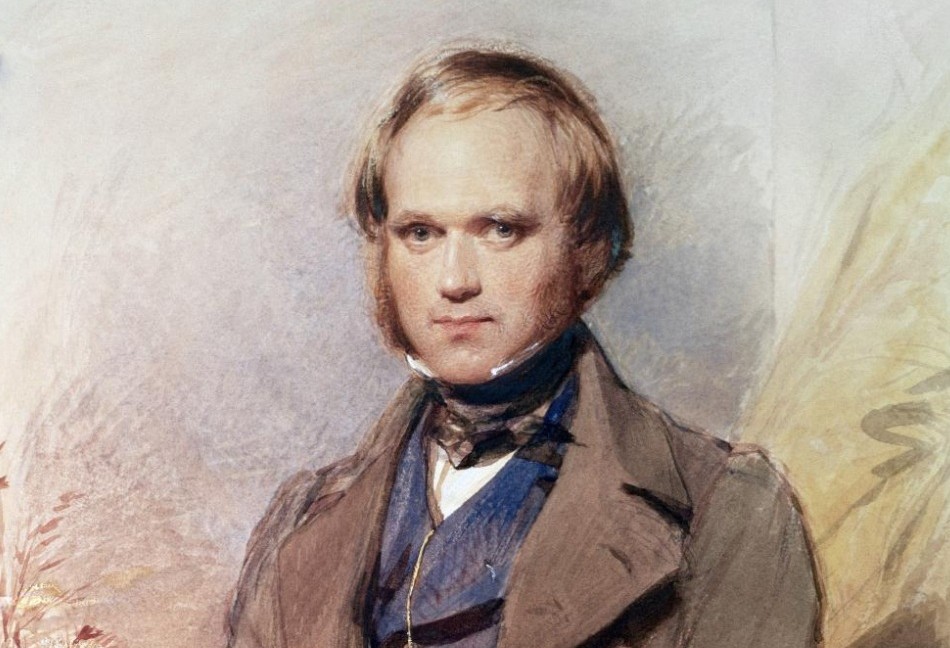
Image Notes: Public domain portrait of young Charles Darwin by George Richmond. The image has been cropped, retouched, and resized.
Acknowledgement: Great thanks to Simon Kasif whose email led QI to formulate this question and perform this exploration. Kasif included the quotation together with an attribution to Darwin in a paper he co-authored.
- 1871, The Descent of Man, and Selection in Relation to Sex by Charles Darwin, Volume 2 of 2, Chapter 21: General Summary and Conclusion, Quote Page 385, John Murray, London. (Google Books Full View) link ↩︎
- 1871 April, The British Quarterly Review, American Edition, Politics, Science, and Art, (Book Review of Chales Darwin’s “The Descent of Man and Selection in Relation to Sex), Start Page 299, Quote Page 301, Column 2, Leonard Scott Publishing Company, New York. (Internet Archive) link ↩︎
- 1872 June 20, Nature, Our Book Shelf by T.W.W., (Book Review of Meibauer’s Physische Beschaffenheit des Sonnensystems), Quote Page 140, Column 1, Macmillan and Company, London. (Internet Archive) link ↩︎
- 1891, Familiar Quotations, Edited by John Bartlett, Ninth Edition, Entry: Charles Robert Darwin [1809-1882], Quote Page 449, Column 1, Little, Brown and Company, Boston, Massachusetts. (Internet Archive) link ↩︎
- 1942, A New Dictionary of Quotations on Historical Principles from Ancient and Modern Sources, Selected and Edited by H. L. Mencken (Henry Louis Mencken), Topic: Falsehood, Quote Page 381, Column 2, Alfred A. Knopf. New York. (Verified with hardcopy) ↩︎