Frederick Douglass? J. H. Robinson? Joseph Stolz? Hortense Beck Hinton? George Hastings McNair? Anonymous?
Question for Quote Investigator: Every advancement for humankind has faced opposition. One must work hard to achieve improvements. A famous activist wrote the following:
If there is no struggle there is no progress. Those who profess to favor freedom and yet depreciate agitation, are men who want crops without plowing up the ground.
These words have been attributed to U.S. social reformer and abolitionist Frederick Douglass. Would you please help me to find a citation?
Reply from Quote Investigator: In August 1857 Frederick Douglass delivered a speech commemorating the abolition of slavery in the British West Indies. Boldface added to excerpts by QI:1
The whole history of the progress of human liberty shows that all concessions yet made to her august claims, have been born of earnest struggle. The conflict has been exciting, agitating, all-absorbing, and for the time being, putting all other tumults to silence. It must do this or it does nothing.
If there is no struggle there is no progress. Those who profess to favor freedom and yet depreciate agitation, are men who want crops without plowing up the ground, they want rain without thunder and lightning. They want the ocean without the awful roar of its many waters.
This struggle may be a moral one, or it may be a physical one, and it may be both moral and physical, but it must be a struggle. Power concedes nothing without a demand. It never did and it never will.
Below are additional selected citations in chronological order.
In 1783 “The English Review” of London published a piece containing a thematically related remark about the necessity of struggle:2
The great author of the universe has placed man amidst temptations, trials, and sufferings as the school and theatre of virtue. Where there is no struggle there is no virtue, as where there is no enemy to combat there is no victory.
In 1849 “The Richmond Palladium” published a story titled “The Mystery of Lagrange or, The Hidden Treasure” by J. H. Robinson which contained a version of the main saying. Robinson highlighted poverty as the motivation for struggle instead of freedom:3
‘Progression is the great law and order, and end of existence. Without struggle, there is no progress; without an incentive to struggle, there will be no struggle, and poverty is the great incentive to human effort. Let no person despair because he is poor.’
In 1857 Frederick Douglass delivered a speech containing the quotation as mentioned previously.
In 1903 Rabbi Joseph Stolz delivered a sermon in Chicago, Illinois which included a version of the saying:4
It is where people toil the hardest that the intellect has learned to harness the forces of nature, that men are strongest and society is most progressive. It is a law of history that where there is no struggle there is no progress …
In 1922 by George Hastings McNair published “Timely Lessons on Today’s Living” which included a version of the saying:5
No one can appreciate his blessings until he has spelled the value of a dollar in backache and beaded brow. World progress means world struggle; the two terms are coextensive.
No progress means no struggle and no struggle, no progress. What is true of the whole is true of the individual.
In 1979 the “Star-Exponent” of Culpeper, Virginia published a letter from Hortense Beck Hinton who was the Assistant Dean of Afro-American Affairs at the University of Virginia. Hinton shared the quotation from Frederick Douglass:6
… I quote the noted black activist, Frederick Douglass — “If there is no struggle, there is no progress. Those who profess to favor freedom and yet depreciate agitation, are men who want crops without plowing up the ground…”
In conclusion, Frederick Douglass deserves credit for the quotation under examination which he used during a speech in August 1857. Other people have employed similar expressions, but Douglass’s full quotation was unique.
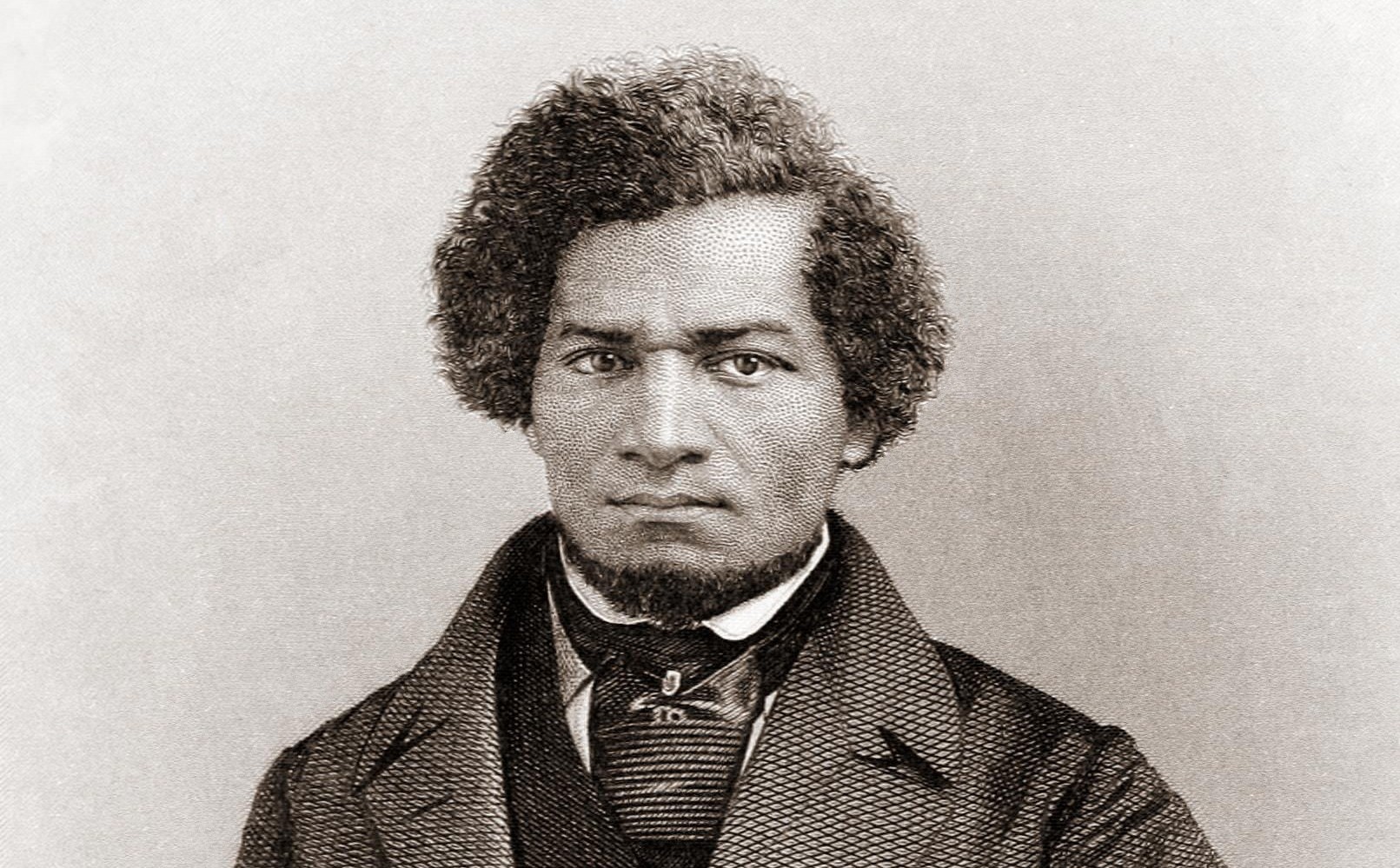
Image Notes: Portrait of Frederick Douglass engraved by J.C. Buttre from a daguerreotype. The image has been cropped and resized.
Acknowledgement: Great thanks to Mardy Grothe who mentioned this quotation in the March 22, 2026, edition of his newsletter “Dr. Mardy’s Quotes of the Week”. This inspired QI to formulate this question and perform this exploration. The quotation also appears on Grothe’s website with a citation pointing to the 1857 speech.
- 1857, Two Speeches by Frederick Douglass; One on West India Emancipation, Delivered at Canandaigua, Aug. 4th, and the Other on the Dred Scott Decision, Delivered in New York, on the Occasion of the Anniversary of the American Abolition Society, May 1857, Quote Page 21 and 22, C. P. Dewey Printer, Rochester, New York. (Google Books Full View) link ↩︎
- 1783 December, The English Review, Article: Essays on Suicide, and the Immortality of the Soul, Start Page 418, Quote Page 422, Printed for J. Murray, London. (Google Books Full View) link ↩︎
- 1849 June 27, The Richmond Palladium, Select Tale: From the Flag of Our Union: The Mystery of Lagrange or, The Hidden Treasure by J. H. Robinson, Quote Page 1, Column 3, Richmond, Indiana. (Newspapers_com) link ↩︎
- 1903 December 3, Unity, The Pulpit: The Public School—A Bulwark of Our Republic, Sermon Delivered by Rabbi Joseph Stolz at the Union Thanksgiving Services Held at Garrick Theater, Chicago on November 26, 1903, Start Page 214, Quote Page 215, Column 1, Unity Publishing Company, Chicago, Illinois. (Google Books Full View) link ↩︎
- 1922 Copyright, Timely Lessons on Today’s Living by George Hastings McNair, Chapter: A Lesson on Work — The Boulder, Start Page 23, Quote Page 25, The Bullock Press, Newport, Vermont. (Google Books Full View) link ↩︎
- 1979 September 12, Star-Exponent, Section: Forum, Letter Title: Praise for Mortimer Marshall, Letter Author: Hortense Beck Hinton, Assistant Dean of Afro-American Affairs, University of Virginia, Quote Page 4, Column 4, Culpeper, Virginia. (Newspapers_com) link ↩︎