Walter Kerr? Jean Kerr? Caroline A. Lejeune? Dorothy Parker? Walter Winchell? Goodman Ace? Clare Boothe Luce? Alexander Woollcott? Kenneth Tynan?
Question for Quote Investigator: A famous one-line theater review employed a horrible pun. Many people have been credited with this pun, but I have never seen any solid evidence.
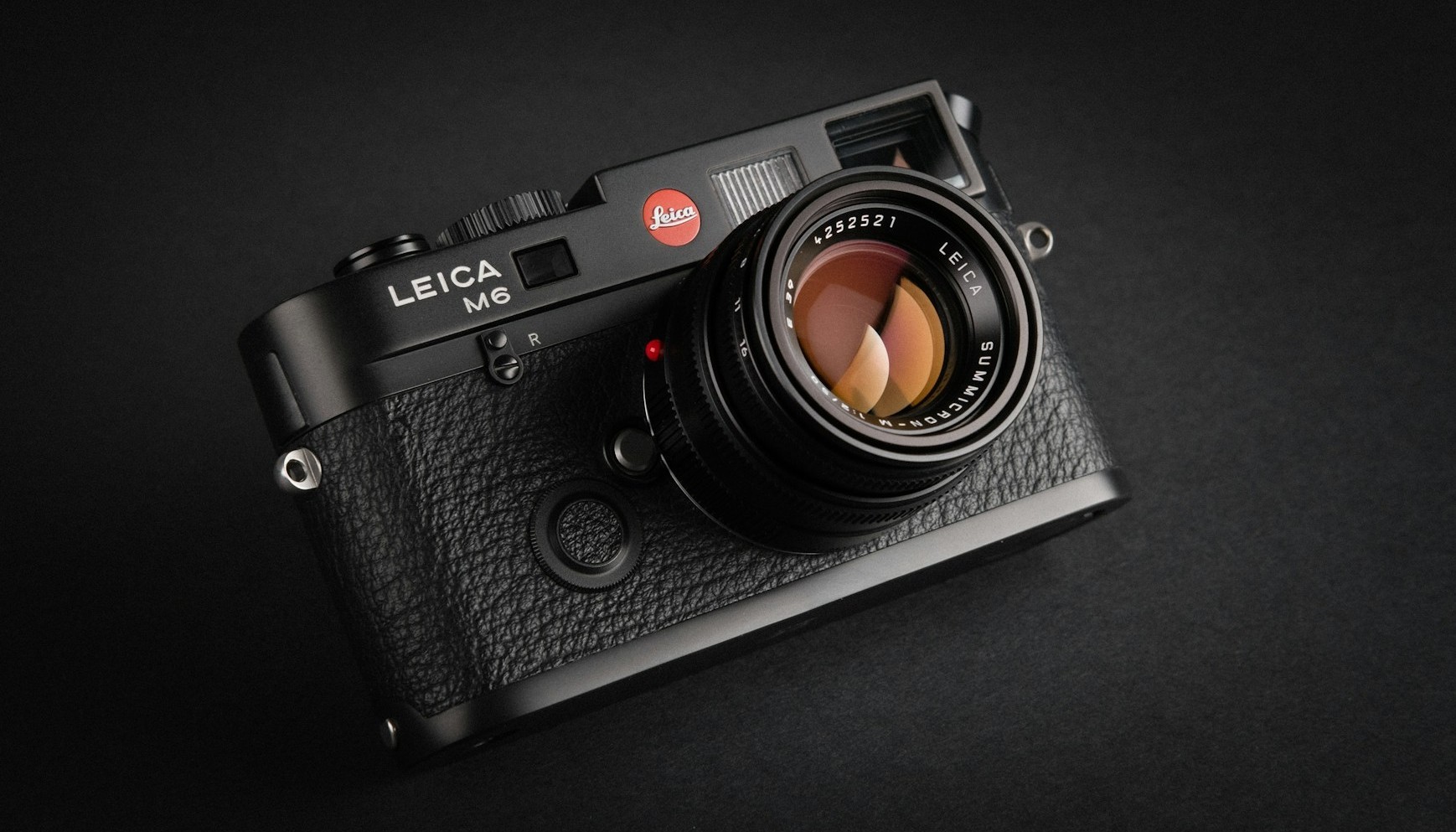
The target of the review was the 1951 Broadway play “I Am a Camera” by John Van Druten which was adapted from Christopher Isherwood’s 1939 novel “Goodbye to Berlin”. The two-word appraisal simply stated: “No Leica”. This wordplay was based on the pronunciation “like-a” for the German camera company Leica.
Drama critics Walter Kerr, Caroline Lejeune, and Kenneth Tynan have all received credit for this pun. In addition, the joke has been attributed to witty writers such as Dorothy Parker, Jean Kerr, and Goodman Ace. Would you please explore this topic?
Reply from Quote Investigator: The earliest close match known to QI appeared in the widely syndicated newspaper column of Walter Winchell in December 1951. Boldface added to excerpts by QI:1
Goodman Ace’s capsule criticism of the play, “I Am a Camera”: “No Leica!” … (Sorry, folks. These Are The Jokes!).
Based on current knowledge QI believes that U.S. humorist Goodman Ace deserves credit for this joke. Below are additional selected citations in chronological order.
The underlying pun was in circulation several years before the comical review of the play “I Am a Camera” appeared. For example, in 1937 “Sales Management: The Magazine of Modern Marketing” printed the following:2
Monkey songs were popular at the turn of the century. You may remember one called “Under the Bamboo Tree.” A currently popular camera reminds me of the refrain of that song: “If you Leica me like I Leica you.”
Another example of the pun occurred in 1938 within “Minicam: The Miniature Camera Monthly” which printed a comical “Photographer’s Lexicon” containing these four items:3
bromide paper — script used by radio comedians
candid – sugar coated
Leica — South Sea dialect; e.g. “You Leica me, I Leica you.”
superpan — movie actor’s face
Walter Kerr reviewed the play “I Am a Camera” in the November 29, 1951 issue of the “New York Herald Tribune”. The review was largely positive, and Kerr praised the actress Julie Harris who played the central character Sally Bowles. Kerr did not use the pun in his review.4
In December 1951 columnist Walter Winchell attributed the pun to a prominent humorist as mentioned previously:5
Goodman Ace’s capsule criticism of the play, “I Am a Camera”: “No Leica!”
In March 1952 the joke achieved further distribution when it appeared in the popular magazine “Reader’s Digest”:6
Goodman Ace’s capsule criticism of the play I Am a Camera: “No Leica!” — Walter Winchell
In April 1952 “LIFE” magazine published a profile of actress Julie Harris and mentioned the comical review:7
As a play, I Am a Camera pleased few critics, one of whom summed up his opinion in two words: no Leica. But as an individual performance by an enormously talented actress it got great praise and remains as one of the few new plays worth seeing in what the New York Times gloomily calls “this incredible season.”
In 1956 a slightly different version of the joke appeared using the phrase “me no Leica” in the periodical “The Daily Film Renter” in London:8
The film commentator — thank God! —seldom or never attempts to act; he may be able to throw away a picture with a wisecrack (“‘I Am A Camera’ — me no Leica!”), but he is too wise to venture his hand, or voice, at throwing away a line of dialogue.
In January 1957 syndicated columnist Earl Wilson printed the pun while crediting an anonymous “witty critic”:9
When the play, “I Am a Camera,” was dehooded on Broadway a few seasons ago, some witty critic commented, “No Leica.”
In August 1957 syndicated columnist by Bennett Cerf published the joke while crediting an anonymous critic:10
A play called “I Am a Camera” was a solid hit on Broadway a few seasons ago, but one critic persisted in sneering at it. He summed up his feelings, in fact, in just two words: “No Leica.”
In 1965 columnist Larry Wolters attributed the joke to author and playwright Jean Kerr who was married to critic Walter Kerr:11
The most incisive review we can recall was by Jean Kerr on the play “I Am a Camera.” She did it in two words: “No Leica.”
In 1969 Lore and Maurice Cowan published the compilation “The Wit of Women” which attributed the joke to a well-known British film critic:12
Caroline Lejeune
Review of the film ‘I Am A Camera’ — Me no leica.
In 1973 Leslie Halliwell published the compilation “The Filmgoer’s Book of Quotes” which contained the following passage:13
Very little film criticism is quotable: at its best it is an expression of personality rather than wit. The reviews one remembers tend to be the scathing ones, especially those dismissive one-liners …
Halliwell gave several examples which included these three items without attribution:
I Am a Camera. Me no Leica.
Lost in a Harem. But with Abbott and Costello.
Ben Hur. Loved Ben, hated Hur.
In 1980 “The Penguin Dictionary of Modern Quotations” contained an entry crediting Caroline Lejeune:14
C. A. LEJEUNE
Me no leica. [In review of film, I am a Camera]
In 1983 actress Diana Rigg edited and published a compilation titled “No Turn Unstoned: The Worst Ever Theatrical Reviews”. This book contained the earliest attribution to Walter Kerr seen by QI:15
Walter Kerr, reviewing I Am a Camera (1954-5): Me no Leica.
In September 1982 “No Turn Unstoned” was reviewed in the “Leicester Mercury” of Leicester, England16 and in the “Evening Standard” of London.17 Both newspapers reprinted the pun and credited Walter Kerr.
In 1983 Leonard Rossiter published the compilation “The Lowest Form of Wit: The Definitive Guide to Sarcasm” which contained an entry crediting writer and diplomat Clare Boothe Luce:18
After seeing I am a Camera, Clare Boothe Luce wrote: ‘Me no Leica.’
In 1986 “The Guardian” newspaper of London credited English theatre critic Kenneth Tynan:19
Tynan’s outrageous puns about the theatre were fresh and I will always remember his review of John Van Druten’s I Am A Camera, for which the heading was simply “No Leica!” These sort of puns tend to be repeated but have faded and grown stale.
In 1988 the columnist and verbivore Richard Lederer attributed the pun to U.S. drama critic Alexander Woollcott. The name was misspelled in the Concord, New Hampshire newspaper:20
Alexander Wolcott: “I just saw Isherwood’s play I Am a Camera. No Leica.”
In 1999 “The Independent” of London printed yet another attribution:21
… Dorothy Parker’s supremely terse review of the stage play I Am a Camera (“Me no Leica”).
In conclusion, Goodman Ace was the most likely creator of this comical review based on the December 12, 1951 citation. The underlying pun of Leica/like-a was circulating by 1937. The attributions to critics such as Jean Kerr, Caroline A. Lejeune, and Walter Kerr only occurred more than a decade after the play premiered. The evidence provided by these late citations was unconvincing.
Image Notes: Picture of a Leica camera from Dan Freeman at Unsplash. The image has been cropped and resized.
Acknowledgements: Great thanks to all the participants in the Bluesky thread discussing this pun. The thread led QI to formulate this question and perform this exploration. Benjamin Dreyer mentioned playwright John Van Druten. Peter Sagal mentioned the Leica pun. John Baxindine found the Goodman Ace attribution in December 1951 and the Bennett Cerf citation in 1957. Kevin Ford found Walter Kerr’s November 29, 1951 review of “I Am A Camera”. MtBotany asked QI to investigate. Thanks also to previous researcher Nigel Rees. Thanks Edward Quine for reporting a typo.
- 1951 December 12, Wilkes-Barre Times Leader Evening News, Broadway Midnight by Walter Winchell, Quote Page 47, Column 1 and 2, Wilkes-Barre, Pennsylvania. link (Newspapers_com) ↩︎
- 1937 September 1, Sales Management: The Magazine of Modern Marketing, Volume 41, Number 5, Scratch Pad, Quote Page 54, Column 3, Sales Management Inc., New York. (Verified with scans) ↩︎
- 1938 December, Minicam: The Miniature Camera Monthly, Volume 2, Number 4, Words Just Words: Photographer’s Lexicon, Quote Page 109, Column 1, Automobile Digest Publishing Corporation, Cincinnati, Ohio. (Verified with scans) ↩︎
- 1951 November 29, New York Herald Tribune, The Theaters by Walter F. Kerr, (Review of the play “I am a Camera”), Quote Page 18, Columns 1 to 3, New York. (ProQuest) ↩︎
- 1951 December 12, Wilkes-Barre Times Leader Evening News, Broadway Midnight by Walter Winchell, Quote Page 47, Column 1 and 2, Wilkes-Barre, Pennsylvania. link (Newspapers_com) ↩︎
- 1952 March, Reader’s Digest, Volume 60, Number 359, Critics Crack the Quip, Quote Page 16, The Reader’s Digest Association, Pleasantville, New York. (Verified with scans) ↩︎
- 1952 April 7, LIFE, Close-Up: Julie Harris by Robert Wallace, Start Page 154, Quote Page 154, Time Inc., Chicago, Illinois. (Google Books Full View) ↩︎
- 1956 February 8, The Daily Film Renter, Crix Nix, Quote Page 2, Column 1, London, England. (ProQuest) ↩︎
- 1957 January 5, Courier-Post, It Happened Last Night by Earl Wilson, Quote Page 5, Column 4, Camden, New Jersey. (Newspapers_com) list ↩︎
- 1957 August 9, Evening Herald, Try and Stop Me by Bennett Cerf, Quote Page 4, Column 3, Shenandoah, Pennsylvania. link (Newspapers_com) ↩︎
- 1965 December 2, Chicago Tribune, Critic Set to Retire Recalls 36-Year Job by Larry Wolters, Quote Page D10, Column 5, Chicago, Illinois. (ProQuest) ↩︎
- 1969, The Wit of Women, Compiled by Lore and Maurice Cowan, Chapter: Stage and Screen, Entry: Caroline Lejeune, Quote Page 158, Leslie Frewin, London, England. (Verified with scans) ↩︎
- 1974, The Filmgoer’s Book of Quotes by Leslie Halliwell, Section: Critics, Page 44, (Reprint of 1973 edition Granada Publishing, London), Arlington House, New Rochelle, New York. (Verified on paper) ↩︎
- 1980, The Penguin Dictionary of Modern Quotations, Edited by J. M. Cohen and M. J. Cohen, Second edition, (Reprint dated 1983), Section: C. A. Lejeune, Quote Page 200, Penguin Books, New York. (Verified on paper) ↩︎
- 1983, No Turn Unstoned, Edited by Diana Rigg, Chapter 5: Stones Across the Atlantic, Quote Page 110, Doubleday & Company, Inc., Garden City, New York. (UK edition 1982) (Verified with hardcopy of US edition) ↩︎
- 1982 September 8, Leicester Mercury, The savaging of the stars, Quote Page 6, Column 7, Leicester, Leicestershire, England. (Newspapers_com) ↩︎
- 1982 September 15, The Standard (Evening Standard), Funny how they remember our lines by Milton Shulman (Review of the book “No Stone Unturned” compiled by Diana Rigg), Quote Page 21, Column 6, London, England. (ProQuest) ↩︎
- 1983 (1981 Copyright), The Lowest Form of Wit: The Definitive Guide to Sarcasm, Compiled by Leonard Rossiter, Chapter: The Art of Sarcasm, Quote Page 15, Sphere Books Limited, London, England. (Verified with scans) ↩︎
- 1986 April 26, The Guardian, The theatre goes straight by Jonathan Miller, Quote Page 11, Column 6, London, England. (ProQuest) ↩︎
- 1988 March 21, Concord Monitor, Drama Critics Deserve Top Billing For Piercing Putdowns by Richard Lederer, Quote Page D3, Column 2, Concord, New Hampshire. (Newspapers_com) ↩︎
- 1999 October 15, The Independent, Film: ‘Stunning’, ‘hilarious’, ‘unmissable’ … say the reviews, yet the chances are the movie is rubbish. Who do film critics think they’re fooling? by Stephen James, Quote Page 15, London, England. (ProQuest) ↩︎