D’Arcy Wentworth Thompson? Kenneth E. Boulding? John Hospers? Daniel Dennett? William H. Calvin? William Pittenger? Apocryphal?
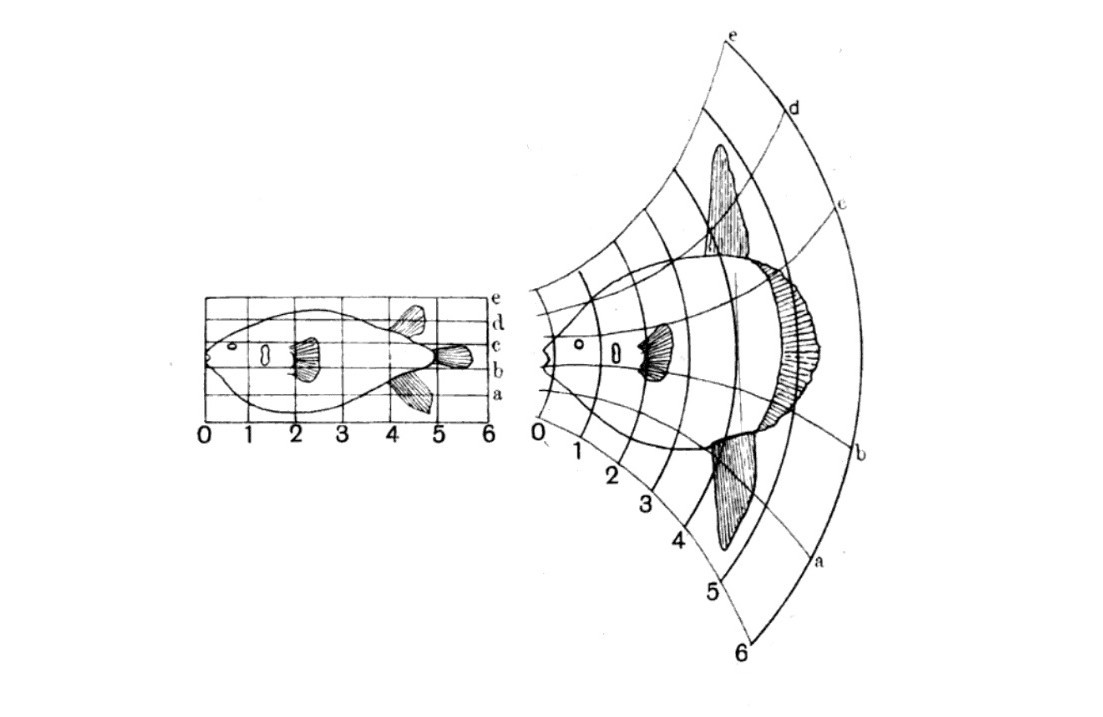
Question for Quote Investigator: Scottish biologist D’Arcy Wentworth Thompson often receives credit for the following concise statement about biological structures:
Everything is what it is because it got that way.
Thompson authored the influential 1917 book “On Growth and Form”, but I was unable to find this saying inside that book.1 Hence, I am skeptical of this attribution.
The economist Kenneth E. Boulding has also received credit for this saying, but I have never seen a precise citation. Would you please explore this topic?
Reply from Quote Investigator: The earliest close match known to QI appeared in 1968 within a book chapter titled “America’s Economy: The Qualified Uproarious Success” by Kenneth E. Boulding. Boldface added to excerpts by QI:2
There is a very fundamental principle of nature which states that everything is what it is because it got that way; in other words, we must look at the history of a structure before we can really understand it.
Boulding indicated in his other writings that he had formulated this saying based on his interpretation of the book “On Growth and Form” by D’Arcy Wentworth Thompson. Thus, Boulding deserves credit for the phrase although Thompson inspired him.
Here is an overview presenting dates, attributions, and statements. This overview includes variants based on the template to provide variety:
1871 Aug: Everything is as it is, because it could be no other way. (William Pittenger presented his conception of an atheistic viewpoint)
1903 Jul: Everything is as it is because everything has the will of God as its primary cause. (J. W. Richard presented his conception of the viewpoint of theologian John Calvin)
1909 Oct: Each thing is as it is because it is best for it so to be. (A philosophical viewpoint mentioned by Charles M. Bakewell)
1953: Everything is what it is because of everything that ever happened to it and all the conditions under which it exists. (John Hospers)
1953: At any moment the form of any object, organism, or organization is a result of its laws of growth up to that moment. (Kenneth E. Boulding presented his conception of the viewpoint of D’Arcy Wentworth Thompson)
1960: Everything is what it is at any moment because it got that way by a process of growth. (Kenneth E. Boulding presented his conception of the viewpoint of D’Arcy Wentworth Thompson)
1968: Everything is what it is because it got that way. (Kenneth E. Boulding presented this as a fundamental principle of nature)
1986: Everything is what it is because it got that way. (Attributed to D’Arcy Wentworth Thompson by William H. Calvin)
1987: Everything is what it is because it got that way. (Kenneth E. Boulding claimed this saying was his “own invention” inspired by D’Arcy Wentworth Thompson)
1991: Everything is what it is because it got that way. (Attributed to D’Arcy Wentworth Thompson by Daniel Dennett)
Below are details for selected citations in chronological order.
In 1871 “The Phrenological Journal” published an article titled “Under the Surface or Universal Law” by William Pittenger which contained dialogues illustrating philosophical viewpoints. One dialogue featured an interviewer and a character called “Mr. Atheist”. The first statement below was from “Mr. Atheist”:3
“It is the scheme of eternal necessity. Everything is as it is, because it could be no other way.”
“That’s satisfactory. But you see no ordering of laws, no indications of purpose?”
“None at all. Inherent qualities work out inevitable results.”
In 1903 “The Lutheran Quarterly” printed an article by James W. Richard which discussed 16th century French theologian John Calvin. Richard summarized Calvin’s perspective with the following statement:4
Everything is as it is because everything has the will of God as its primary cause.
In 1909 Charles M. Bakewell published an article about Socrates in the “International Journal of Ethics”. Bakewell discussed the reaction of Socrates to Anaxagoras. Socrates considered the notion that a mind was the author of all things. Bakewell paraphrased Socrates as follows:5
For if mind be the cause, then we can show that each thing is as it is because it is best for it so to be.
In 1953 philosopher John Hospers of Brooklyn College published a textbook titled “An Introduction to Philosophical Analysis”. The book contained an exercise with a pertinent parenthetical statement:6
Evaluate each of the following assertions. Clear up whatever confusions they may contain …
This egg before me would not be the egg that it is if it had not been laid by this hen, at this time, at this place, if it were not being seen by me now, and about to be eaten by me. (Everything is what it is because of everything that ever happened to it and all the conditions under which it exists.)
In 1953 Kenneth E. Boulding published an article titled “Toward a General Theory of Growth” in “The Canadian Journal of Economics and Political Science”. Boulding presented his formulation of a key principle in Thompson’s book “On Growth and Form”. Boulding misspelled “Thompson” as “Thomson”:7
This might be called the D’Arcy Thomson principle, after its most famous exponent. It is the principle that at any moment the form of any object, organism, or organization is a result of its laws of growth up to that moment. Something which grows uniformly in all directions will be a sphere. Something which grows faster in one direction than in others will be “long.” Something which grows faster on one side than on the other will twist into some sort of spiral.
In 1960 Boulding published a book chapter titled “Decision-Making in the Modern World”. Boulding presented a different phrasing for his condensation of Thompson. Once again, Boulding misspelled “Thompson”:8
It was D’Arcy Thomson, the great biologist (whose book, Of Growth and Form, for all its baroque qualities, is to my mind one of the greatest books of the twentieth century) who most clearly developed these principles in relation to biological organisms. He presents three such basic principles. The first is simply that the law of growth determines the form of any organization, that everything is what it is at any moment because it got that way by a process of growth.
In 1968 Boulding published a chapter about the U.S. economy in the book “America Now” as mentioned near the beginning of this article. Boulding employed a concise version of the saying:9
Averages, of course, can be very misleading. We must look beyond a figure like that of per capita real income to the structure of the economy both in time and in space before it can be properly evaluated. In time, the critical problem is growth. There is a very fundamental principle of nature which states that everything is what it is because it got that way; in other words, we must look at the history of a structure before we can really understand it.
In 1969 Boulding delivered an address at Pomona College in California, and the student newspaper printed a remark he made:10
Boulding said that persons learn values by a complicated process, just as scientific knowledge is acquired by a process of testing. “Everything is what it is because it got that way”, he said, summarizing his belief that what persons are today is due to information they received and generated yesterday.
In 1974 Cynthia Earl Kerman published a biography titled “Creative Tension: The Life and Thought of Kenneth Boulding”. The ninth chapter used the following epigraph:11
Everything is what it is because it got that way.
— KEB’s formulation of “D’Arcy Thompson’s Law”
In 1986 William H. Calvin published “The River That Flows Uphill: A Journey from the Big Bang to the Big Brain”. Calvin attributed the saying directly to Thompson:12
Everything is what it is because it got that way.
The biologist D’Arcy Thompson, On Growth and Form, 1917
In 1987 Boulding published a piece in “Systems Research: The Official Journal of the International Federation for Systems Research”. Within a footnote, Boulding stated that the saying was his “own invention”:13
The core of general systems is an interest in the general patterns that pervade the immensely complex structure of space-time. I have often mentioned what I have called D’Arcy Thompson’s Law—‘Everything is what it is because it got that way’. *
*The ‘law’ is my own invention, but it was very much influenced by reading D’Arcy Thompson’s On Growth and Form sometime in the 1950s.
In 1991 Daniel Dennett published “Consciousness Explained”. Dennett attributed the saying directly to Thompson:14
Everything is what it is because it got that way.
D’ARCY THOMPSON (1917)
In 2015 Glenn Branch explored the provenance of this expression. Branch was unable to find this saying in Thompson’s book “On Growth and Form”. Branch found the key citations from Boulding dated 1953 and 1968. Branch concluded that Boulding crafted the saying.15
In conclusion, Kenneth E. Boulding deserves credit for this saying. Boulding’s formulation became simpler and more compact over time as shown in the citations dated 1953, 1960, and 1968. Boulding was inspired by the book “On Growth and Form” by D’Arcy Wentworth Thompson.
Image Notes: Illustration from the 1917 book “On Growth and Form” by D’Arcy Wentworth Thompson.
Acknowledgement: Great thanks to Brendan Keefe whose message inspired QI to formulate this question and perform this exploration. Keefe’s message led to the helpful article by Glenn Branch. Thanks also to PZ Myers and Wertheimer.
- 1917, On Growth and Form by D’Arcy Wentworth Thompson, Quotation is absent, Cambridge University Press, Cambridge, England. (Google Books Full View) link ↩︎
- 1968, America Now, Edited by John G. Kirk, Chapter: America’s Economy: The Qualified Uproarious Success by Kenneth E. Boulding, Start Page 143, Quote Page 147, Atheneum, New York. (Verified with scans) ↩︎
- 1871 August, The Phrenological Journal and Life Illustrated, Under the Surface; or Universal Law by William Pittenger, Start Page 81, Quote Page 85, Column 1, Samuel R. Wells, New York. (Google Books Full View) link ↩︎
- 1903 July, The Lutheran Quarterly, The Two Reformation Theologies by Professor J. W. Richard (James W. Richard), Start Page 316, Quote Page 352, Barbehenn & Little Ltd, Gettysburg, Pennsylvania. (Google Books Full View) link ↩︎
- 1909 October, International Journal of Ethics, Volume 20, Number 1, The Unique Case of Socrates, Charles M. Bakewell, Start Page 9, Quote Page 16, The University of Chicago Press, Chicago, Illinois. (JSTOR) link ↩︎
- 1953 Copyright (1959 Reprint), An Introduction to Philosophical Analysis by John Hospers (Associate Professor of Philosophy, Brooklyn College), Chapter 1: Words and the World, Sub-Chapter 4: Sentences and propositions, Section: Exercises, Quote Page 85, Prentice-Hall Inc., Englewood Cliffs, New Jersey. (Verified with scans) ↩︎
- 1953 August, The Canadian Journal of Economics and Political Science, Volume 19, Number 3, Toward a General Theory of Growth by Kenneth E. Boulding (University of Michigan), (This paper was presented at the annual meeting of the Canadian Political Science Association in London, June 3, 1953), Start Page 326, Quote Page 336, Published by Canadian Economics Association (JSTOR) link ↩︎
- 1960, An Outline of Man’s Knowledge of the Modern World, Edited by Lyman Bryson, Chapter 20: Decision-Making in the Modern World by Kenneth E. Boulding, Start Page 418, Quote Page 427, McGraw-Hill Book Company, New York. (Verified with scans) ↩︎
- 1968, America Now, Edited by John G. Kirk, Chapter: America’s Economy: The Qualified Uproarious Success by Kenneth E. Boulding, Start Page 143, Quote Page 147, Atheneum, New York. (Verified with scans) ↩︎
- 1969 April 2, Progress-Bulletin, Curiosity Important Tool in Science, Says Speaker by Marcia Pomeroy (Student Correspondent), Section 2, Quote Page 1, Column 6, Pomona, California. (Verified with scans) ↩︎
- 1974 Copyright, Creative Tension: The Life and Thought of Kenneth Boulding by Cynthia Earl Kerman, Chapter 9: The Cultural Setting: Life in Liverpool, (Chapter Epigraph), Quote Page 183, The University of Michigan Press, Ann Arbor, Michigan. (Verified with scans) ↩︎
- 1986 Copyright, The River That Flows Uphill: A Journey from the Big Bang to the Big Brain by William H. Calvin, Chapter: Day 1 Mile 8 Badger River, Quote Page 23, Sierra Club Books, San Francisco, California. (Verified with scans) ↩︎
- 1987, Systems Research: The Official Journal of the International Federation for Systems Research, Volume 4, Number 4, Systems Profile: Some Origins by Kenneth E. Boulding (Institute of Behavioral Science, University of Colorado), Start Page 283, Quote Page 283, Pergamon Press, New York. (Verified with scans) ↩︎
- 1991, Consciousness Explained by Daniel C. Dennett, Chapter 7: The Evolution of Consciousness, (Chapter epigraph), Quote Page 171, Little, Brown and Company, Boston, Massachusetts. (Verified with scans) ↩︎
- Website: National Center for Science Education, Article title: “Everything Is the Way It Is …”, Article author: Glenn Branch (Deputy Director of NCSE), Date on website: February 12, 2015, Website description: Advocates for science education. (Accessed ncse.ngo on July 1, 2026) link Wayback Machine link ↩︎