Emily Dickinson? Thomas Wentworth Higginson? Mabel Loomis Todd? M. Lincoln Schuster? Apocryphal?
Question for Quote Investigator: A prominent literary figure was asked about her life experiences, and she responded emphatically:
I find ecstasy in living; the mere sense of living is joy enough.
This remark has been attributed to nineteenth-century poet Emily Dickinson. Some sources claim that Dickinson wrote this statement in a letter, but I cannot find that letter, and I am skeptical. Would you please help me to find a citation?
Reply from Quote Investigator: Unitarian minister Thomas Wentworth Higginson was a literary mentor to Emily Dickinson. He visited her in August 1870, and he wrote about the event in “The Atlantic Monthly” in 1891. Dickinson’s comments to Higginson indicated that her experiences in life were invigorating. The word “ecstasy” was spelled as “ecstacy” in the following excerpt from the magazine text:1
She went on talking constantly and saying, in the midst of narrative, things quaint and aphoristic. “Is it oblivion or absorption when things pass from our minds?” “Truth is such a rare thing, it is delightful to tell it.” “I find ecstacy in living; the mere sense of living is joy enough.”
Dickinson told Higginson about her method for recognizing poetry:
“If I read a book and it makes my whole body so cold no fire can ever warm me, I know that is poetry. If I feel physically as if the top of my head were taken off, I know that is poetry. These are the only ways I know it. Is there any other way?”
Below are additional selected citations in chronological order.
In 1894 Mabel Loomis Todd edited and published two volumes containing the “Letters of Emily Dickinson”. The compilation included commentary about Dickinson’s life. Todd mentioned the article in “The Atlantic Monthly”, and Todd reprinted the remarks spoken by Dickinson to Higginson:2
Among the strong and remarkable things she said to him are several sentences which it seems not irrelevant to insert here:—
‘Is it oblivion or absorption when things pass from our minds?’
‘Truth is such a rare thing, it is delightful to tell it.’
‘I find ecstasy in living; the mere sense of living is joy enough.’
This collection also contained a thematically pertinent remark within a letter sent from Dickinson to Higginson in Winter 1871:3
To live is so startling, it leaves but little room for other occupations, though friends are, if possible, an event more fair.
In 1909 Thomas Wentworth Higginson published “Carlyle’s Laugh, and Other Surprises” which contained a chapter about Emily Dickinson. Higginson reprinted material from the article in “The Atlantic Monthly” including the passages at the beginning of this article:4
In 1924 “The Literary Digest” published a piece about Dickinson titled “Our Poetical New England Nun”. The piece incorrectly suggested that Dickinson wrote the remark instead of speaking it to Higginson:5
“‘I find ecstasy in living,’ she wrote Higginson, whom she called her schoolmaster.”
In 1940 M. Lincoln Schuster edited and published “A Treasury of the World’s Great Letters” which included a supposed letter dated August 1870 credited to Emily Dickinson, but the text of this pseudo-letter was extracted from the article by Thomas Wentworth Higginson published in “The Atlantic Monthly”:6
Truth is such a rare thing, it is delightful to tell it.
I find ecstasy in living; the mere sense of living is joy enough. How do most people live without any thoughts? There are many people in the world, — you must have noticed them in the street, — how do they live? How do they get strength to put on their clothes in the morning?
If I read a book and it makes my whole body so cold no fire can ever warm me, I know that is poetry. If I feel physically as if the top of my head were taken off, I know that is poetry. These are the only ways I know it. Is there any other way?
In 1990 a newspaper in Thomasville, North Carolina printed the following item:7
Thought for the day
‘I find ecstasy in living — the mere sense of living is joy enough.’
— Emily Dickinson.
In conclusion, Emily Dickinson deserves credit for this quotation based on the testimony of Thomas Wentworth Higginson who stated that he heard it from her in 1870. A 1940 book edited by M. Lincoln Schuster stated that Dickinson wrote the quotation in a letter, but QI has not found any substantive support for that claim.
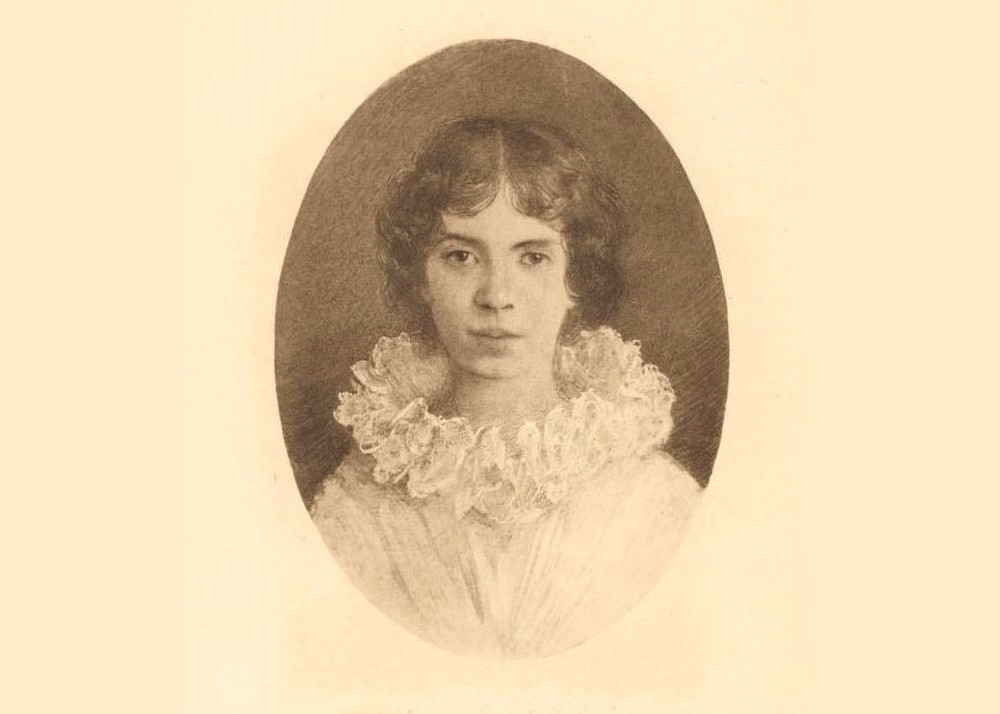
Image Notes: Photogravure of Emily Dickinson by artist Laura Coombs Hill from “The Life and Letters of Emily Dickinson” (1924) by her niece Martha Dickinson Bianchi.
Acknowledgement: Great thanks to Prudence Crowther whose inquiry about a different quotation ascribed to Dickinson led QI to discover the 1891 piece in “The Atlantic Monthly”. Reading this piece inspired QI to explore the quotation under examination in this article.
- 1891 October, The Atlantic Monthly, Volume 68, Number 408, Emily Dickinson’s Letters by Thomas Wentworth Higginson, Start Page 444, Quote Page 453, Column 1, Houghton, Mifflin and Company, Boston, Massachusetts. (Google Books Full View) link ↩︎
- 1894, Letters of Emily Dickinson, Edited by Mabel Loomis Todd, Volume 2 of 2, Chapter 7: To Mr Thomas Wentworth Higginson, Date: August 1870, Quote Page 14 and 315, Roberts Brothers, Boston, Massachusetts. (Google Books Full View) link ↩︎
- 1894, Letters of Emily Dickinson, Edited by Mabel Loomis Todd, Volume 2 of 2, Chapter 7: To Mr Thomas Wentworth Higginson, Letter To: Mr. T. W. Higginson, Letter From: Emily Dickinson, Letter Date: Winter 1871, Quote Page 316, Roberts Brothers, Boston, Massachusetts. (Google Books Full View) link ↩︎
- 1909 Copyright, Carlyle’s Laugh, and Other Surprises by Thomas Wentworth Higginson, Chapter 19: Emily Dickinson, Quote Page 274, Houghton Mifflin Company, Boston, Massachusetts. (Google Books Full View) link ↩︎
- 1924 August 2, The Literary Digest, Volume 82, Number 5, Our Poetical New England Nun, Start Page 34, Quote Page 34, Column 2, Funk & Wagnalls Company, New York. (Google Boks Full View) link ↩︎
- 1940, A Treasury of the World’s Great Letters, Edited by M. Lincoln Schuster, Chapter: Emily Dickinson Finds Ecstasy in the Mere Sense of Living, Quote Page 366, Simon and Schuster, New York. (Verified with scans) ↩︎
- 1990 October 27, The Thomasville Times, Thought for the day, Quote Page 4A, Column 5, Thomasville, North Carolina. (Newspapers_com) link ↩︎