Edward Albee? Jessamyn West? Pablo Picasso? Anonymous?
Question for Quote Investigator: A gifted creator of fiction deliberately contorts the truth. Crucial aspects of reality are exaggerated while other aspects are minimized. Yet the aim is to convey deeper truths. An influential artist said:
Fiction is fact distorted into truth.
This statement has been attributed to the U.S. dramatist Edward Albee who wrote “Who’s Afraid of Virginia Woolf?”, “The Zoo Story”, and “Three Tall Women”. Would you please help me to find a citation?
Reply from Quote Investigator: In September 1966 Edward Albee was interviewed by a journalist in “The New York Times”. The piece began with a compelling remark from Albee. Boldface added to excerpts by QI:1
“A play is fiction—and fiction is fact distorted into truth.”
Edward Albee smiled his iced-acid public smile as he said it. Hunched over his lime-spiked Coke, he politely submitted to questions about whether his plays are autobiographical, answering with the needle-point precision of one who edits as instinctively as he draws the breath to speak.
Below are additional selected citations in chronological order.
The artist Pablo Picasso delivered a thematically similar remark during an interview which was printed in 1923 within the New York City periodical “The Arts: An Illustrated Monthly”. Picasso’s original responses in Spanish were translated into English:2
We all know that art is not truth. Art is a lie that makes us realize truth, at least the truth that is given us to understand. The artist must know the manner whereby to convince others of the truthfulness of his lies.
A separate Quote Investigator article about the quotation immediately above is available at this link.
In 1957 the writer Jessamyn West penned a thematically related remark in her memoir “To See the Dream”:3
Fiction reveals truths that reality obscures …
A separate Quote Investigator article about the quotation immediately above is available at this link.
In 1966 Edward Albee employed the quotation under examination as mentioned previously.
In 1967 Stanley J. Menking authored an article in the “Christian Advocate”. Menking used Albee’s remark while describing the works of another writer:4
Her fiction fulfills in the best sense Edward Albee’s definition that “fiction is fact distorted into truth.”
In 1968 “Reader’s Digest” magazine printed a miscellaneous collection of quotes under the title “Quotable Quotes” which included the following item:5
A play is fiction—and fiction is fact distorted into truth.
—Edward Albee, quoted by Paul Steiner in Playbill
In 1970 Eugene E. Brussell published the “Dictionary of Quotable Definitions”. Brussell rephrased Albee’s remark to fit the format of a definition:6
FICTION
Fact distorted into truth. Edward Albee
In 1998 the “Millard County Chronicle Progress” of Delta, Utah printed the following filler item:7
“Fiction is fact distorted into truth.” Edward Albee
In conclusion, Edward Albee deserves credit for the comment he made during a 1966 interview in “The New York Times”. Pablo Picasso and Jessamyn West made thematically related observations.
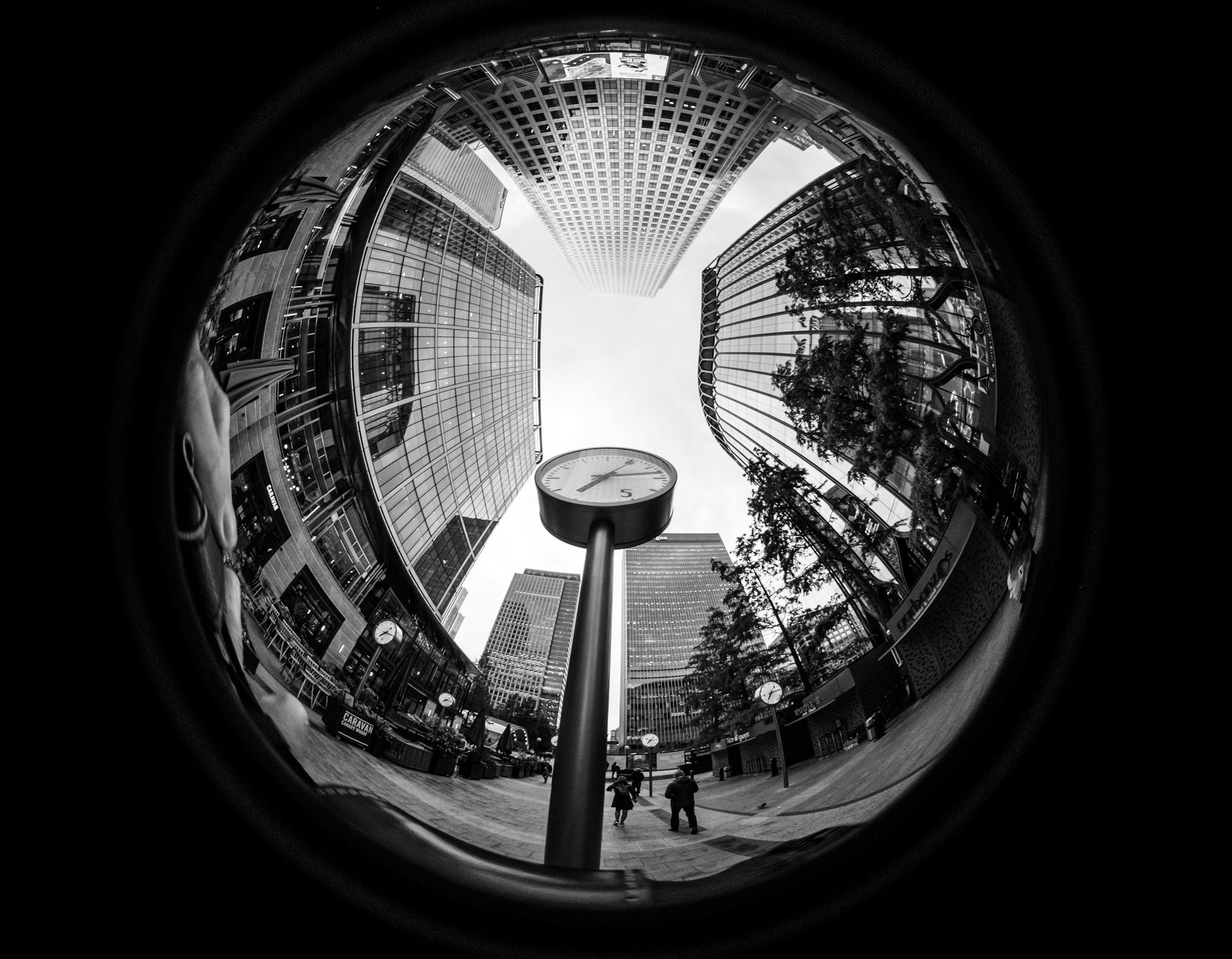
Image Notes: Fisheye lens picture of Canary Wharf in London from Kevin Grieve at Unsplash. The image has been resized.
Acknowledgement: Great thanks to Sarah Darer whose inquiry about the quotation attributed to Jessamyn West led QI to encounter the comment by Edward Albee which inspired this article.
- 1966 September 18, The New York Times, Albee: ‘I’m Still in Process’ by Elenore Lester, Quote Page 1D, Column 1, New York. (ProQuest) ↩︎
- 1923 May, The Arts: An Illustrated Monthly Magazine Covering All Phases of Ancient and Modern Art, Volume 3, Number 5, Picasso Speaks: A Statement by the Artist (Note accompanying text: Picasso gave his interview to “The Arts” in Spanish, and subsequently authenticated the Spanish text which we herewith translate), Start Page 315, Quote Page 315, The Arts Publishing Corporation, New York. (HathiTrust Full View) link ↩︎
- 1957 Copyright, To See the Dream by Jessamyn West, Part 1, Quote Page 39, Harcourt, Brace and Company, New York. (Verified with scans) ↩︎
- 1967 February 23, Christian Advocate, Volume 11, Number 4, The Death and Discovery of the Self by Stanley J. Menking, Start Page 7, Quote Page 7, Column 1, The Methodist Publishing House, Nashville, Tennessee. (Verified with scans) ↩︎
- 1968 October, Reader’s Digest, Volume 93, Number 558, Quotable Quotes, Quote Page 24B, The Reader’s Digest Association, Pleasantville, New York. (Verified with scans) ↩︎
- 1970 Copyright, Dictionary of Quotable Definitions, Edited by Eugene E. Brussell, Entry: Fiction, Quote Page 199, Column 1, Prentice-Hall Inc., Englewood Cliffs, New Jersey. (Verified with scans) ↩︎
- 1998 April 9, Millard County Chronicle Progress, (Filler item), Quote Page 5, Column 1, Delta, Utah. (Newspapers_com) link ↩︎