Question for Quote Investigator: Being an attentive listener is crucial to developing successful relationships. Yet, few people are willing to provide this courtesy. The activist and lecturer Helen Keller has received credit for the following remark:
Everybody talks, nobody listens. Good listeners are as rare as white crows.
I have not been able to find a solid citation. Would you please help?
Reply from Quote Investigator: In May 1935 Helen Keller published an article titled “The Beauty of Silence” in “The Home Magazine” of Chicago, Illinois. Keller discussed her perception of sound via vibrations. She emphasized the importance of reducing noise and listening to one another. Boldface added to excerpts by QI:1
Everybody talks, nobody listens.Good listeners are as rare as white crows. No sooner does one set out to expound a theory or explain a situation than someone breaks in with “That’s all nonsense! Such ideas will never be taken seriously in America.” How can a fruitful conversation spring from such an attitude?
Below are additional selected citations in chronological order.
Isaac Asimov? Robert Burnham Jr.? Thomas M. Nichols? Apocryphal?
Multi-Level Library in Germany from Unsplash
Question for Quote Investigator: A science fiction luminary said:
There is a cult of ignorance in the United States … nurtured by the false notion that democracy means that “my ignorance is just as good as your knowledge.”
These words have been credited to Isaac Asimov. Would you please help me to find a citation together with the full statement.
Reply from Quote Investigator: In January 1980 Isaac Asimov published an opinion piece in “Newsweek” magazine containing the following passage. Boldface added to excepts by QI:1
There is a cult of ignorance in the United States, and there always has been. The strain of anti-intellectualism has been a constant thread winding its way through our political and cultural life, nurtured by the false notion that democracy means that “my ignorance is just as good as your knowledge.”
Asimov’s essay advocated the following:
I believe that what we badly need is social approval of learning and social rewards for learning.
Below are additional selected citations in chronological order.
Question for Quote Investigator: A famous scientist has received credit for an eloquent statement about the goals of teaching. Here are two versions:
(1) It is the supreme art of the teacher to awaken joy in creative expression and knowledge.
(2) The most important art of the teacher is to awaken the joy of creating and discovering.
These words have been attributed to physicist Albert Einstein. I am skeptical. Was the original statement written in German or English? Would you please help me to find a citation?
Reply from Quote Investigator: On February 26, 1931, the “Pasadena Star-News” of Pasadena, California published an article about a ceremony for a new astronomical observatory at Pasadena Junior College (now Pasadena City College). Albert Einstein delivered a speech to the students, faculty, and other attendees which included the following:1
Bear in mind the fact that the wonderful things which you come to know in your schools are the product of many generations which has been accomplished in enthusiastic struggle and with great effort in all countries of the earth.
All this is now laid in your hands as your inheritance to the end that you may receive, honor and advance it and some day faithfully convey it to your posterity. Thus we mortals are immortal in that we work together in never-ending achievement.
The saying under examination was not in Einstein’s speech; instead, Einstein provided a German inscription for a bronze plaque of dedication. A picture of the plaque appeared in the reference work “The Ultimate Quotable Einstein” edited by Alice Calaprice published by Princeton University Press. Oddly, the plaque specified “E” as the initial for Einstein’s middle name; however, Einstein did not have a middle name. Boldface added to excerpts by QI:2
ASTRONOMY BUILDING DEDICATED 26 FEBRUARY 1931 by ALBERT E. EINSTEIN
“Es ist die wichtigste Kunst des Lehrers, die Freude am Schaffen und am Erkennen zu wecken”
Here is one possible translation of this German epigram into English:
“The most important art of the teacher is to awaken the joy of creating and discovering.”
The 1931 article in the “Pasadena Star-News” provided the following translation:
For the inscription to go on the bronze plaque dedicating the observatory, Dr. Einstein contributed this significant epigram: “It is the supreme art of the teacher to awaken joy in creative expression and knowledge.”
Below are additional selected citations in chronological order.
Andy Rooney? Vic Smith? Sam Patterson? Eve Watson? Jim Harvey? Anonymous?
Illustration of toilet paper rolls from Unsplash
Question for Quote Investigator: Every year of childhood feels like an eon. Every year of middle age feels like six months. Every year of old age feels like a month. A folksy simile expresses this idea:
Life is like a roll of toilet paper — the closer you get to the end of it, the faster it goes.
This statement is usually attributed to U.S. radio and television personality Andy Rooney, but I have never seen a solid citation. Would you please explore this topic?
Reply from Quote Investigator: The earliest close match found by QI appeared in December 1985 within a column by Vic Smith published in “The Florida Times-Union” of Jacksonville, Florida. Smith specified an anonymous attribution. Boldface added to excerpts by QI:1
I guess it’s like I heard a feller say not long ago: Life is like a roll of toilet paper — the closer you get to the end of it, the faster it goes.
Andy Rooney received credit by May 2000, but QI believes that the attribution was not persuasive. Details are presented further below.
Below are additional selected citations in chronological order.
H. L. Mencken? Jo Petty? Max L. Forman? Apocryphal?
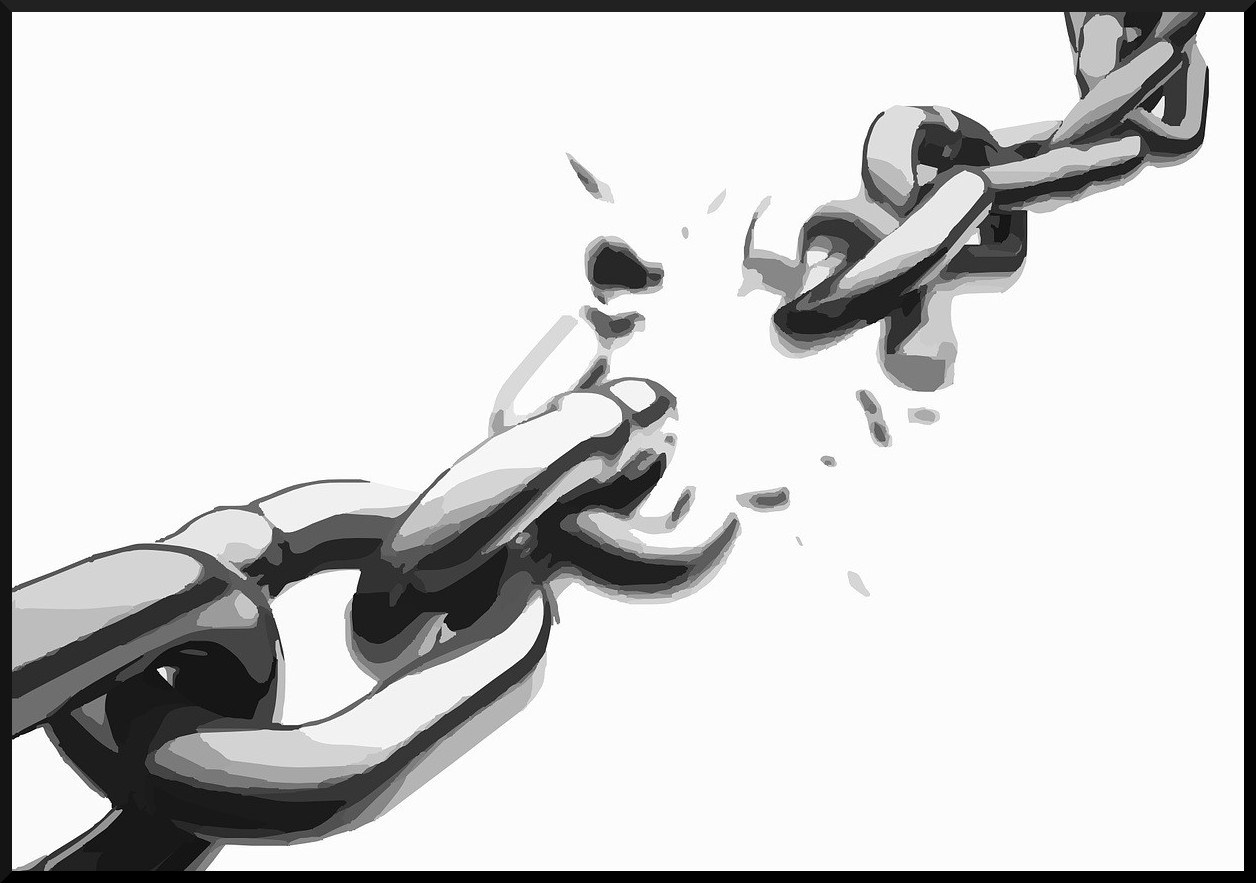
Illustration of a breaking chain from Pixabay
Question for Quote Investigator: Freedom is precious. Without continual vigilance, it disappears. Safeguarding it requires unrelenting commitment. A popular political commentator said something like the following about freedom:
No price that is ever asked for it is half the cost of doing without it.
This statement has been attributed to the Baltimore-based cultural critic H. L. Mencken; however, I have not found a solid citation. Would you please help me?
Reply from Quote Investigator: In 1924 H. L. Mencken published the collection “Prejudices Fourth Series” which contained the following. Boldface added to excerpts by QI:1
The ancient American tradition, in so far as it was vital and productive and civilized, was obviously a tradition of individualism and revolt, not of herd-morality and conformity …
In brief, we must be willing to pay a price for freedom, for no price that is ever asked for it is half the cost of doing without it.
Below are additional selected citations in chronological order.
Oscar Wilde? Harold Mellor? Francis Douglas? Percy Colson? Beverley Baxter?
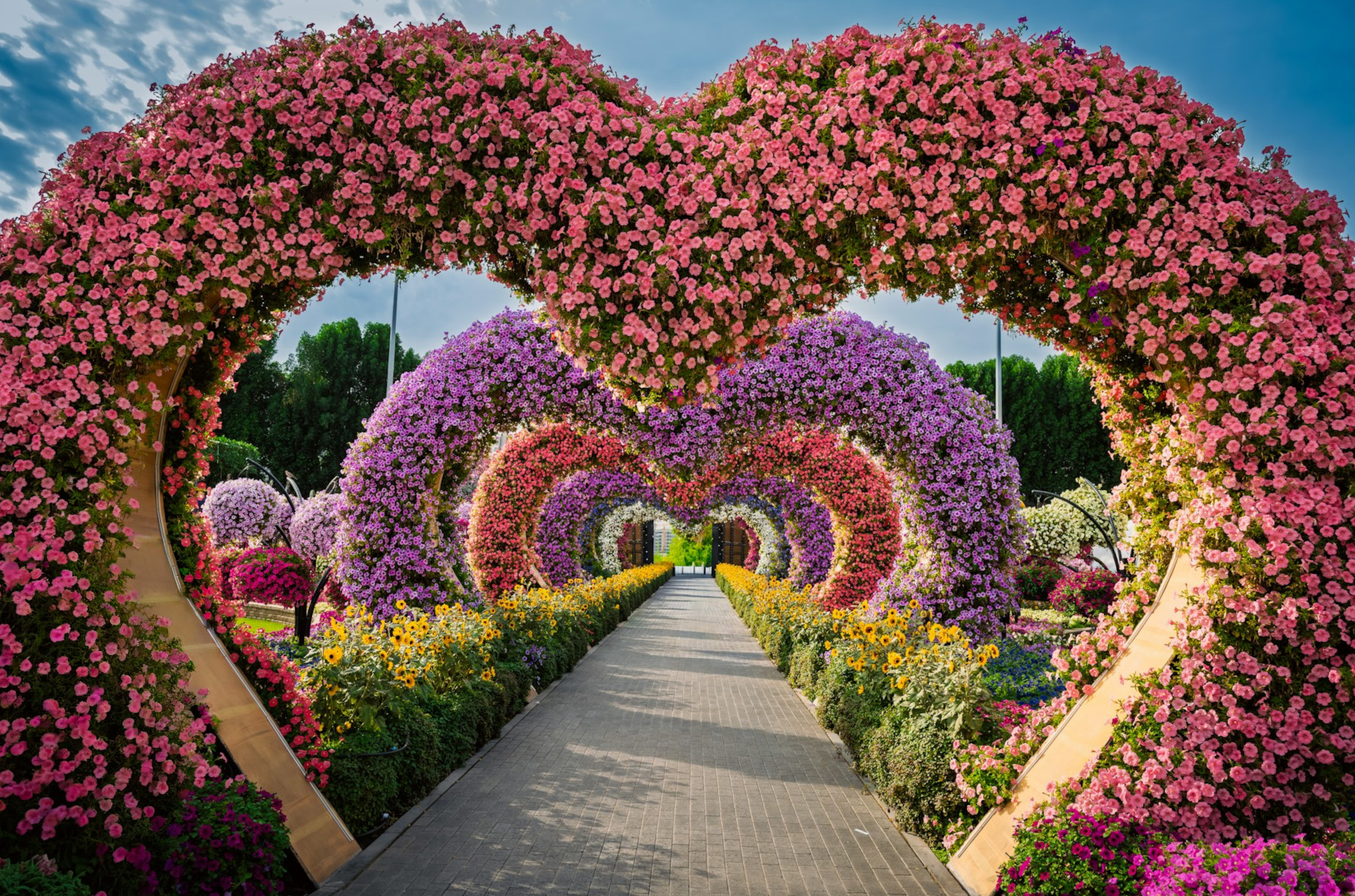
Heart-shaped arch of flowers from Unsplash
Question for Quote Investigator: When you are filled with love you nurture other people. The absence of love is bleak and discouraging. Here is a pertinent saying:
Life without love is like a sunless garden with dead flowers.
Apparently, the brilliant Irish wit Oscar Wilde crafted this emotional line or something similar. I am skeptical because Wilde is usually unsentimental. Would you please help me to find a citation if one exists?
Reply from Quote Investigator: Oscar Wilde died in 1900 after his imprisonment and the breaking of his spirit. In 1949 Francis Douglas, in collaboration with Percy Colson, published “Oscar Wilde and the Black Douglas”. The book discussed the harrowing downfall of Wilde precipitated by the actions of John Sholto Douglas, the 9th Marquess of Queensberry. The author Francis Douglas, the 11th Marquess of Queensberry, disagreed with his grandfather’s actions and was sympathetic to Wilde.
The book printed bons mots ascribed to Oscar Wilde such as these items. Boldface added to excerpts by QI:1
“It is only the very dull who like practical jokes.”
“If your sins find you out, why worry? It is when they find you in, that trouble begins.”
“Most religious teachers spend their time trying to prove the unproven by the unprovable.”
“Keep love in your heart. A life without it is like a sunless garden when the flowers are dead. The consciousness of loving and being loved brings a warmth and richness to life that nothing else can bring.”
The authors claimed that Harold Mellor, a wealthy admirer of Wilde, wrote down these statements. Between 1898 and 1900 Wilde visited and travelled with Mellor three times. Harold Mellor died in 1925. QI does not know precisely when Mellor recorded Wilde’s words.
Thus, evidence suggests that Oscar Wilde made the statements quoted above. However, the accuracy of their transcription depends on Harold Mellor’s memory and credibility. Further, this evidence was relayed through the co-authors Francis Douglas and Percy Colson.
Below are additional selected citations in chronological order.
Waldemar Kaempffert? G. K. Chesterton? Apocryphal?
Illustration of a golden robot from Pixabay
Question for Quote Investigator: The ongoing progress in robotics reminds me of skeptical remarks such as the following:
(1) There will never be a robot, a tireless mechanism performing all the functions of a man.
(2) A robot would be brainless because even an ingenious technologist cannot make a collection of wheels, shafts, magnets, and wires think.
(3) There will never be a robot schoolmaster or governess.
Apparently, comments like these were made in the 1920s or 1930s. The first two statements have been attributed to U.S. science journalist Waldemar Kaempffert. The third statement has been attributed to prominent English literary figure G. K. Chesterton. I am not sure of the precise phrasing for any of these statements. Would you please explore this topic?
Reply from Quote Investigator: Waldemar Kaempffert was an acclaimed science journalist and museum director. He wrote for “Scientific American” and became the editor of “Popular Science Monthly”. In October 1927 Kaempffert published an article in “The New York Times” in which he speculated about the capabilities and limitations of future robots:1
There will never be a Robot—a brainless, tireless, unemotional mechanism fashioned in the image of a man, performing all the functions of a man, moving about stiffly but surely, pulling levers, turning control wheels, wielding broom, pick or shovel.
Medieval contrivers frittered away their talents in constructing lifelike automata that could write a name and play a tune or two, and that outwardly resembled Robots. The modern engineer has no patience with such fantastic creations. …
To drive home the limitations of an actual Robot, let us assume that an engineer undertook to construct one and to endow it with as many human talents as possible. The machine would, of necessity, be brainless, because even the most ingenious technologist cannot make a collection of wheels, shafts, magnets and wires think.
But it could move, hear, see and feel under human control. Instead of legs its creator would give it wheels for simplicity’s sake—wheels which would be driven by electric current supplied either by a battery or a little dynamo mounted within what might be called the “trunk.”
Its eyes would be photoelectric cells that would resemble the familiar vacuum tubes of a radio set and would perceive minute differences of light and darkness. Its ears would be telephone receivers …
Below are additional selected citations in chronological order.
Question for Quote Investigator: An influential banker once commented on the growing skepticism of U.S. citizens:
Heaven help America when she loses faith in slogans
Would you please tell me what prompted this remark and who delivered it?
Reply from Quote Investigator: In 1929 the United States experienced the stock market crash and the beginning of the Great Depression which continued for about ten years.
In April 1932 a meeting of the Academy of Political Science was held at the Hotel Astor in New York City. Sir Josiah Stamp, the director of the Bank of England, delivered a speech that was printed in the proceedings. Stamp commented on the disillusionment of the U.S. public. Boldface added to excerpts by QI:1
First of all, I notice a great loss of faith in institutions; institutions of government, institutions of control, institutions of finance, institutions of education no longer command the general confidence. … They feel doubtful about them. They have discovered, rightly or wrongly, that they are not the source of all wisdom.
Also I see a considerable lack of confidence in men whose names you would have considered as infallible, something to conjure with, a year or two ago. But worst of all, from the American point of view, there has been a loss of faith in slogans—and heaven help America when she loses faith in slogans!
Below are additional selected citations in chronological order.
Anaïs Nin? Lassie Benton? Elizabeth Appell? Jean Paul Richter? Orison Swett Marden? Apocryphal?
Picture of a lotus bud
Question for Quote Investigator: Growth and transformation are frightening. Yet, maintaining stasis is stultifying. Here are two versions of a popular metaphorical expression about accepting change:
(1) And the day came when the risk to remain closed in a bud, became more painful than the risk it took to blossom.
(2) Then the day came when the risk to remain tight in a bud was more painful than the risk it took to blossom.
This saying has been attributed to prominent diarist Anaïs Nin, writer Lassie Benton, and writer Elizabeth Appell. Would you please explore this topic?
Reply from Quote Investigator: Researchers have uncovered no substantive evidence supporting the attribution to Anaïs Nin who died in 1977.
The earliest close match found by QI in a published book appeared in 1984 within “A Practical Approach to Human Behavior in Business” by Allen L. Appell of San Francisco State University. The saying appeared as a chapter epigraph which was ascribed to Lassie Benton:1
And the day came when the risk to remain closed in a bud, became more painful than the risk it took to blossom. —Lassie Benton
An important article clarifying the origin of the quotation appeared in 2013 on the website of Sky Blue Press which publishes works by Anaïs Nin together with a literary journal focused on Nin’s legacy.
The website published a note from Elizabeth Appell in which she claimed credit for the quotation. Appell also stated that she previously used the name Lassie Benton:2
I wrote it in 1979. I was Director of Public Relations for John F. Kennedy University in Orinda. One of my responsibilities was to write, edit, and publish the class schedule which included events, news, and class information for the up-coming quarter. …
Another wrinkle: at the time I was using my nickname, “Lassie” as well as my first husband’s last name, Benton. I was known as Lassie Benton. Since then I gave up the nickname to use my given name, Elizabeth, and remarried Allen Appell, hence Elizabeth Appell.
The message from Appell included a scan of an undated pamphlet page from John F. Kennedy University of Orinda, California displaying the following version of the saying:
… and then the day came when the risk to remain tight, in a bud, became more painful than the risk it took to blossom …
QI believes that Elizabeth Appell (Lassie Benton) is the leading candidate for creator of this expression although the precise phrasing has varied over time.
Below are additional selected citations in chronological order.
André Gide? Leonardo da Vinci?Albert Camus?Carol Shields? Igor Stravinsky? Orson Welles? Apocryphal?
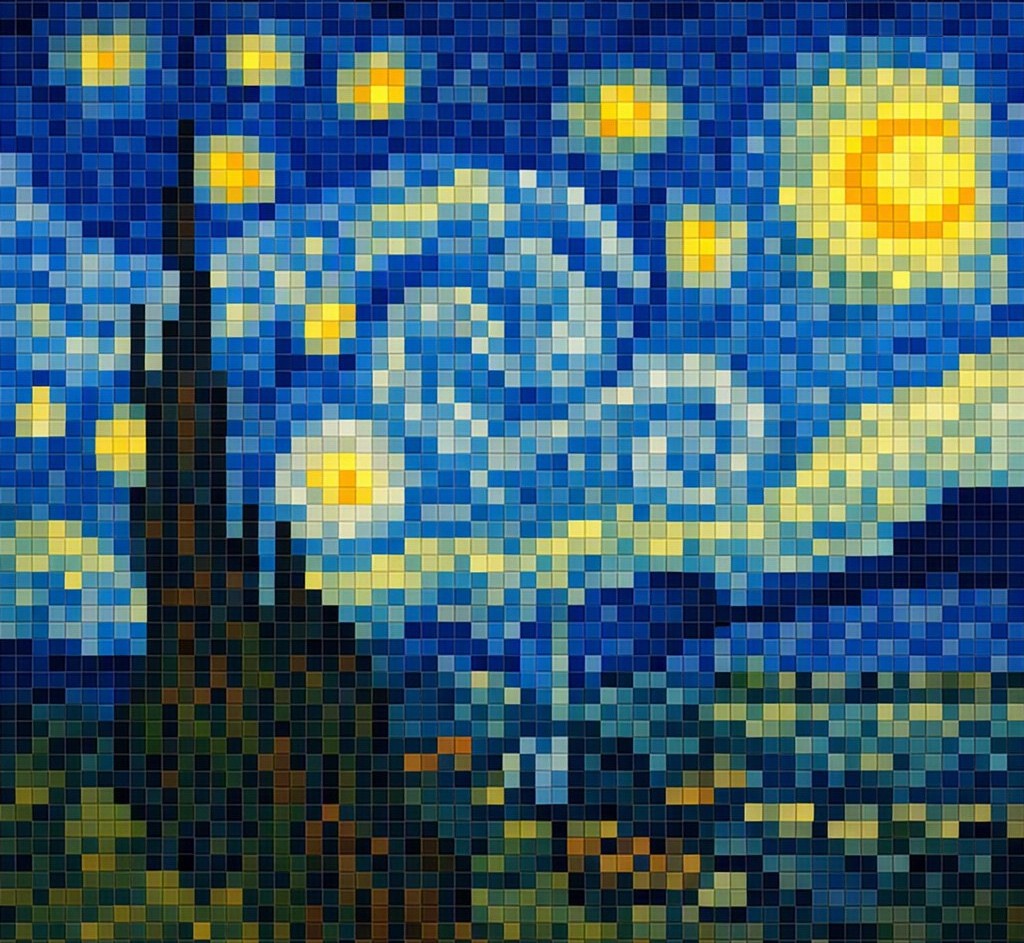
Mosaic version of The Starry Night by Vincent van Gogh
Question for Quote Investigator: A scrappy independent movie director who was given a massive budget created a pretentious flop. A poet who wrote brilliant iambic pentameter could only compose pedestrian free verse. A musician who spent countless hours in the studio finally released an unlistenable album. These examples illustrate a compelling maxim. Here are three versions:
(1) Art lives from constraints and dies from freedom. (2) Art is born of constraint and dies of liberty. (3) Art is born of constraint and dies of too much freedom.
This adage has been attributed to French author André Gide, Italian polymath Leonardo da Vinci, French philosopher Albert Camus, and others. Here are two extended versions of the saying:
(1) Art is born of constraint, lives on conflict, and dies of liberty. (2) Art is born of constraint, thrives on struggle, dies of freedom.
Would you please explore this topic?
Reply from Quote Investigator: The earliest close match found by QI appeared in a speech titled “De L’Évolution du Théatre” (“On the Evolution of Theater”) delivered in Brussels by André Gide in 1904. The following passage in French is followed by an English translation. Boldface added to excerpts by QI:1
Le grand artiste est celui qu’exalte la gêne, à qui l’obstacle sert de tremplin. C’est au défaut même du marbre que Michel-Ange dut, raconte-t-on, d’inventer le geste ramassé du Moïse. C’est par le nombre restreint des voix dont il pouvait à la fois disposer sur la scène que, contraint, Eschyle dut d’inventer le silence de Prométhée lorsqu’on l’enchaîne au mont Caucase. La Grèce proscrivit celui qui ajouta une corde à la lyre. L’art naît de contrainte, vit de lutte, meurt de liberté.
The great artist is one whom constraint exalts, for whom an obstacle serves as a springboard. It was to a flaw in the very marble, so the story goes, that Michelangelo owed the invention of Moses’s compact, coiled posture. It was the limited number of voices available to him on stage that compelled Aeschylus to devise the silence of Prometheus as he was chained to Mount Caucasus. Greece banished the man who added a string to the lyre. Art is born of constraint, lives by struggle, and dies of freedom.
Below are additional selected citations in chronological order.