Adage Origin: The Only Good Author Is a Dead Author

Patrick O’Connor? Stella Adler? Edward Fuller? Elizabeth Hodgson? Irving Babbitt? Margaret Harford? Jed Harris? Anonymous?

Picture of books containing works by famous dead authors

Question for Quote Investigator: Living authors are often viewed with a mixture of suspicion and aggravation. Here are three versions of a pertinent adage:

(1) The only good author is a dead author.
(2) All good authors are dead authors.
(3) The best author is a dead author.

Interestingly, this adage has two different meanings. Publishers and editors use the adage to encapsulate a collection of complaints about writers, e.g., late manuscripts, poor quality writing, and exorbitant monetary demands.

Academics and critics use the adage to signal that a delay is required when evaluating the worthiness of a writer. Typically, the quality, impact, and longevity of a literary oeuvre can only be accurately judged many years after the author has died.

Would you please explore the provenance of this adage?

Reply from Quote Investigator: The earliest match found by QI in the domain of publishing and editing appeared on September 29, 1886. Anonymous editors received credit. The earliest match in the domain of criticism and academia appeared on May 29, 1895. The attribution was anonymous. Here is an overview showing selected examples together with dates and attributions:

1886 Sep 29: … they will not pay a man for manuscript unless he will agree to die before it is put in print. This precaution is taken so that the author can’t come in afterward and “cuss” about the bad proofreading. Also on the theory that the only really good author is a dead one. (Attributed to anonymous “western editors”)

1895 May 29: We must not conclude that all good books are old books, nor that all good authors are dead authors. (Anonymous)

1903 Feb: It is unnecessary to assume, of course, that the only good authors are dead authors. Undue depreciation of the literature of the day may be quite as futile as undue approval … (Edward Fuller)

1906 Sep 20: From the teacher’s point of view one is tempted to lay down the rule that the only good authors are dead authors. (Irving Babbitt)

1916 Apr 22: It is a mistake to suppose that the only good authors are dead ones. Some colleges have fostered the idea that literary genius is extinct. (A. S. Mackenzie)

1919 May: They were often bookworms that had bored their way through countless musty volumes, it being their first axiom that the only good author is a dead author. (Attitude ascribed to “old college professors” by Elizabeth Hodgson)

1921 May: There have always been—there will always be—people like Mr. Knox, who feel that the only good author is a dead author, and the only good story an unpopular story. (Attitude ascribed to Vicesimus Knox by an unnamed writer)

1941 Mar 19: The best author is a dead author—at least from the point of view of scholarship. (Attributed to William Y. Tindall)

1958 Jan 10: The only good author is a dead author. (Attributed to Jed Harris by Thornton Wilder)

1970 Apr 19: Ignoring the old saw that “the best author is a dead author,” playwright Brian Friel showed up, very much alive, to maneuver some minor, last-minute changes in his new play, “Crystal & Fox”. (“Old saw” according to Margaret Harford)

1971: When a publisher says that the best authors are dead authors, he means that the latter cannot torment him by being late with their manuscripts, demanding more money, threatening to go off to another publisher, or telephoning him in the middle of the night. (Publisher’s saying according to Anthony Blond)

1972 Spring: Students of twentieth century literature are familiar with the classical position of Academia: namely, the only good author is a dead author. (“Classical position of Academia” according to Eugenia N. Zimmerman)

1975 May 4: We have a motto. It’s that the only good author is a dead author. (“A motto” according to Patrick O’Connor)

1993 Aug 23: The only good author is one who’s been dead at least 100 years. (Attributed to anonymous education reformers)

2008 May 29: The best author is a dead author. He can’t stand around at the rehearsals, watching and making everybody nervous. (Attributed to Stella Adler by Barry Paris)

Below are details for selected citations in chronological order.

Continue reading “Adage Origin: The Only Good Author Is a Dead Author”

Quip Origin: Chaucer Is Dead, Spencer Is Dead, So Is Milton, So Is Shakespeare, and I Am Not Feeling Very Well Myself

Mark Twain? Punch magazine? James T. Fields? William P. Clyde? Walt Mason? Anonymous?

Question for Quote Investigator: Apparently, an effusive admirer of Mark Twain once proclaimed that the famous humorist deserved membership in the pantheon of major writers. Twain’s comical response highlighted his mortality:

I was sorry to have my name mentioned as one of the great authors, because they have a sad habit of dying off. Chaucer is dead, Spencer is dead, so is Milton, so is Shakespeare, and I am not feeling very well myself.

I do not think Mark Twain originated this joke template. A family of similar jokes appeared before Twain received credit. Would you please explore this topic?

Reply from Quote Investigator: There is substantive evidence that Mark Twain employed this type of quip during the 1890s; however, the first recorded instances in this family occurred in the 1870s, and Twain did not receive credit. Here is an overview showing selected examples together with dates and attributions:

1874 Feb 18: Our greatest men are fast departing—first Calhoun, then Clay, and now Webster—and I don’t feel very well myself. (Attributed to an unnamed rural politician)

1874 May 14: Our great men are fast departing—first Greeley, then Chase, and now Sumner—and I don’t feel very well myself. (Attributed to an unnamed member of a Boston school committee)

1874 Jun 17: Our great men are fast departing. First Stanton, then Chase, then Seward, and now Sumner—and I don’t feel very well myself. (Attributed to an unnamed member of a New York literary club)

1883 Mar 10: It is very sad, indeed, to think on the number of the world’s greatest men who have lately been called to their last account. And the fact is I don’t feel very well myself. (Attributed to an unnamed Scotchman)

1884 May 10: The great men are all dead. Washington is dead; Jefferson is dead, and so are Jackson and Clay and Webster, all gone, and—ahem! I don’t feel well myself. (Attributed to an unnamed member of a town council)

1886 Aug 14: POOR McSTAGGER DEID! Er’s VERA SAD TO THENK O’ THE GREAT NUMBER O’ DESTENGWESHED MEN THAT’S LATELY BEEN TA’EN! ’DEED—I NO FEEL VERA WEEL—MYSEL! (Ascribed to the character Kirk Elder)

1892 Feb 27: Homer is dead; Virgil is dead; Shakespeare is dead; and I am not very well. (Attributed by Clare Read to Mark Twain)

1893 May 6: NEARLY ALL OUR BEST MEN ARE DEAD! CARLYLE, TENNYSON, BROWNING, GEORGE ELIOT! — I’M NOT FEELING VERY WELL MYSELF! (Ascribed to the character Little Simpkins)

1894: Homer is dead, Shakespeare and Milton are no more, and I—I don’t feel very well myself. (Attributed by Alfred H. Miles to Mark Twain)

1898: Hawthorne’s dead, Longfellow is dead, Lowell is in wretched health, and I don’t feel very well myself. (Attributed by Chauncey Depew to James T. Fields)

1899 Jun 9: Chaucer is dead, Spencer is dead, so is Milton, so is Shakespeare, and I am not feeling very well myself. (Attributed to Mark Twain)

1900 Jul 1: All the great men are dead, and I don’t feel very well myself. (Attributed to Mark Twain)

1907 Jan 30: I regret particularly that great orators are no longer available. Demosthenes is dead, Cicero is dead, and I am not feeling very well myself. (William P. Clyde)

1922 Jan 24: The Pope is dead; and Viscount Bryce is dead, and I’m not feeling very darn good myself. (Attributed to Dan Worden)

1923 Mar 17: Ah me, those grand old times are sped, and all the saints but me are dead, and I am far from well. (Walt Mason)

1935: Julius Caesar is dead, Shakespeare is dead, Napoleon is dead, Abraham Lincoln is dead, and I am far from well myself. (Attributed by Cyril Clemens to Mark Twain in the period of 1866)

1963 Apr 17: Shakespeare is dead and gone. Milton has been gathered unto his fathers. Tennyson is no longer with us, and, ladies and gentlemen, I am not feeling very well myself. (Attributed to Mark Twain)

Below are details for selected citations in chronological order.

Continue reading “Quip Origin: Chaucer Is Dead, Spencer Is Dead, So Is Milton, So Is Shakespeare, and I Am Not Feeling Very Well Myself”

Quote Origin: The Real Question Is Not Whether Machines Think But Whether People Do

B. F. Skinner? Apocryphal?

Depiction of a circuit with an AI chip from Unsplash

Question for Quote Investigator: A famous psychologist once contemplated the question of machine intelligence and presented a provocative counter question:

The real question is not whether machines think but whether men do.

This statement has been attributed to U.S. behaviorist B. F. Skinner. Would you please help me to find a citation?

Reply from Quote Investigator: In 1969 B. F. Skinner published “Contingencies of Reinforcement: A Theoretical Analysis” which included the following passage. Boldface added to excerpts by QI:1

It is only when machines seem to take over central processes that we grow uneasy. When they select stimuli, identify patterns, convert stimuli into forms more suitable for processing, categorize data, extract concepts, and follow problem-solving strategies, they perform functions which in man are attributed to Mind. …

But the real question is not whether machines think but whether men do. The mystery which surrounds a thinking machine already surrounds a thinking man.

Below are additional selected citations in chronological order.

Continue reading “Quote Origin: The Real Question Is Not Whether Machines Think But Whether People Do”

Motto Origin: Machines Should Work. People Should Think

IBM Motto? Richard Hamming? Sia Armajani? Howard Dimmig? Anonymous?

Illustration of a robot hand from Pixabay

Question for Quote Investigator: Machines can perform work which humans do not wish to perform because it is repetitive and dangerous. Yet, as we enter the age of advanced AI there are many humans who desire to continue to perform creative and engaging tasks. Here are two versions of a pertinent motto:

(1) Machines should work. People should think.
(2) Man should think. Machines should work.

Would you please explore the provenance of this saying?

Reply from Quote Investigator: The earliest match found by QI appeared in February 1968 within “The Oregon Statesman” of Salem, Oregon. A short piece titled “Work vs. Thinking” contained the saying. Boldface added to excerpts by QI:1

The slogan of IBM is “Machines should work. People should think.” Highly paid executives dream up such mottos. They are not released until they have run the gauntlet of marketing research and public opinion testing. So, perhaps we shouldn’t be so audacious as to imply criticism, but we think it doesn’t compute.

QI hypothesizes that the saying was created by IBM copywriters. The precise identity of the person who crafted the motto remains unknown.

 Below are additional selected citations in chronological order.

Continue reading “Motto Origin: Machines Should Work. People Should Think”

Quote Origin: Unfortunately, the Balance of Nature Decrees That a Superabundance of Dreams Is Paid for by a Growing Potential for Nightmares

Peter Ustinov? Frank A. Jones? Apocryphal?

Painting titled “The Nightmare” by Henry Fuseli circa 1781

Question for Quote Investigator: The British actor and raconteur Peter Ustinov once wrote about an inevitable balance between dreams and nightmares. Would you please help me to find a citation?

Reply from Quote Investigator: In February 1989 Peter Ustinov published an article about Orson Welles in “The Independent” newspaper of London. Ustinov wrote about the dichotomous nature of the United States. Boldface added to excerpts by QI:1

The States are richer than other countries in many things. Because of their huge expanses with unending horizons and the relative absence of disillusionment in their history, they are richer in dreams as well. Unfortunately, the balance of nature decrees that a superabundance of dreams is paid for by a growing potential for nightmares.

Below are additional selected citations in chronological order.

Continue reading “Quote Origin: Unfortunately, the Balance of Nature Decrees That a Superabundance of Dreams Is Paid for by a Growing Potential for Nightmares”

Quote Origin: Trying To Be Consistently Not Stupid Instead of Trying To Be Very Intelligent

Charlie Munger? Warren Buffett? Andrew Kilpatrick? Apocryphal?

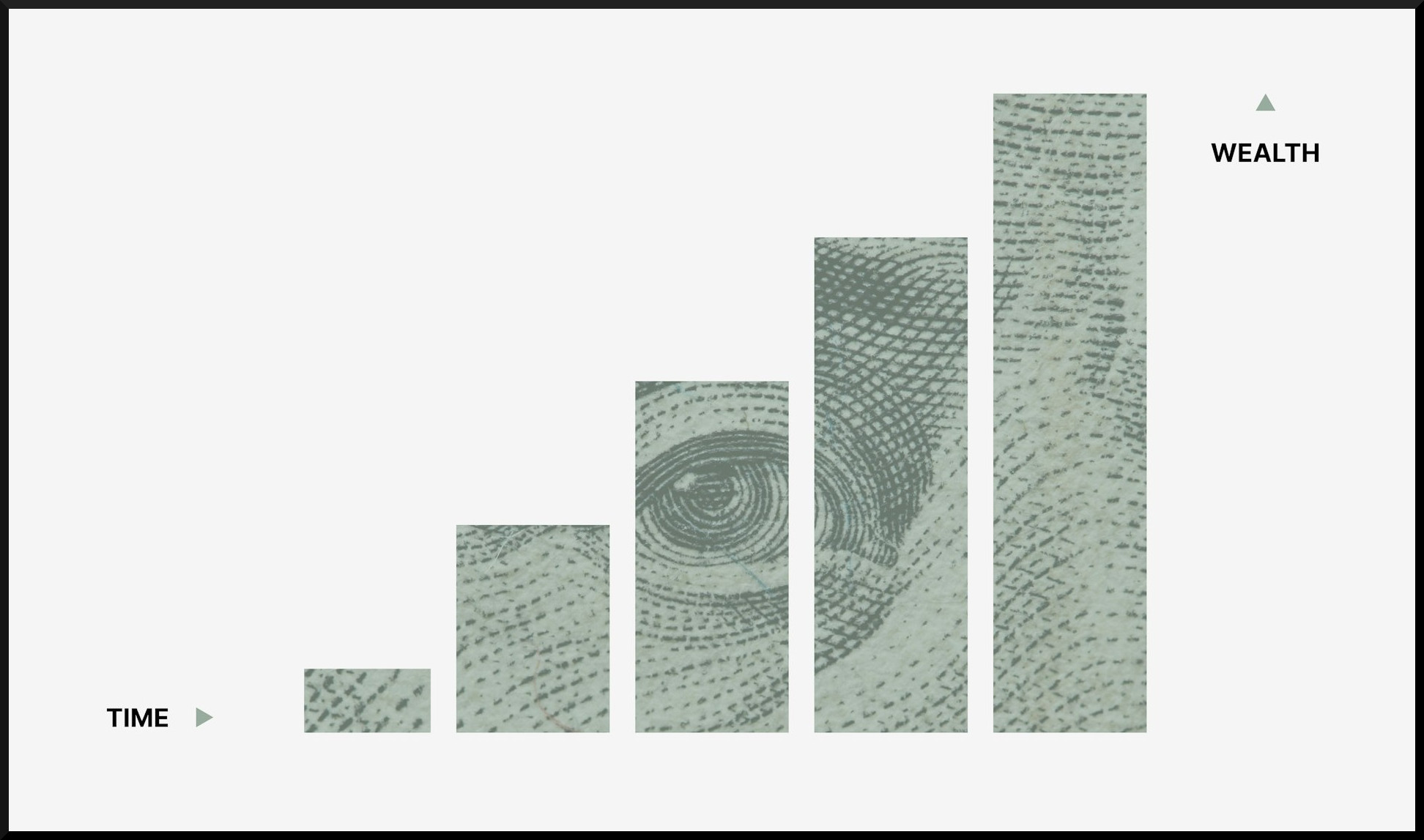
Graph depicting increasing wealth over time from Unsplash

Question for Quote Investigator: A famous investor once wrote about strategies for achieving wealth. The key was not concocting brilliant strategies; instead, the successful long-term investor triumphed by being “consistently not stupid”.

This notion has been attributed to U.S. businessman Charlie Munger. Would you please help me to find a citation?

Reply from Quote Investigator: Charlie Munger was the Chairman of the Board of the Wesco Financial Corporation, and the company’s annual reports often included letters from Munger. The 1989 annual report was released in 1990, and it contained a letter from Munger dated March 5, 1990. Boldface added to excerpts by QI:1

Wesco continues to try more to profit from always remembering the obvious than from grasping the esoteric. It is remarkable how much long-term advantage people like us have gotten by trying to be consistently not stupid, instead of trying to be very intelligent. There must be some wisdom in the folk saying: “It’s the strong swimmers who drown”.

Our approach, while it has worked fairly well on average in the past and will probably work fairly well over the long-term future, is bound to encounter periods of dullness and disadvantage as it limits action.

Below are additional selected citations in chronological order.

Continue reading “Quote Origin: Trying To Be Consistently Not Stupid Instead of Trying To Be Very Intelligent”

Quote Origin: War Consists of Months of Intolerable Boredom Interspersed with Moments of Extreme Fear

Civis? Sapper? Scott Hurtt Paradise? H. O. A. Anne? Anonymous?

Painting of “The Phantom Horseman” by Sir John Gilbert

Question for Quote Investigator: Warfare is horrific, but feelings of terror occur intermittently. Battlefield veterans developed the following saying:

War consists of months of boredom punctuated by moments of sheer terror.

Would you please explore the provenance of this saying?

Reply from Quote Investigator: This description of war has been expressed in many ways. Here is an overview together with dates and attributions:

1909 Jun 28: Months of intolerable boredom interspersed with moments of agonising fear (Credited to Anonymous by Civis)

1909 Sep 28: Weeks of intolerable boredom, punctuated by moments of agonising fear (Credited to Anonymous by Civis)

1910 Aug 16: Months of monotonous fatigue, punctuated by moments of agonising fear (Credited to Anonymous by Civis)

1914 Nov 4: Months of boredom punctuated by moments of terror (Credited to Anonymous by a Cavalry Subaltern)

1914 Dec 9: A period of intense discomfort punctured by moments of abject terror (Credited to an unnamed British officer in South Africa by Lieut. H. O. A. Anne)

1914 Dec 18: Months of boredom, punctured by moments of terror (Credited to Anonymous by Scott Hurtt Paradise)

1914 Dec 19: Months of boredom punctuated by moments of extreme terror (Credited to Anonymous by Lieutenant Philip Smith)

1915 Apr 17: Hours of boredom, punctuated with moments of abject fear (Anonymous)

1916 Mar 18: Months of boredom punctuated by moments of intense fright (Credited to Anonymous by Sapper)

1940 Feb 15: Long periods of extreme boredom, punctuated by short and sharp periods of extreme danger (Lord Milne)

1962 Oct 14: Veteran pilots define flying as endless hours of boredom punctuated by moments of terror (Anonymous)

1970 Apr 16: Period of intense boredom punctuated by moments of acute fear (Attributed to a 17th Century soldier)

Below are details for selected citations in chronological order.

Continue reading “Quote Origin: War Consists of Months of Intolerable Boredom Interspersed with Moments of Extreme Fear”

Quote Origin: Fascism Is a Counter-Revolution Against a Revolution That Never Took Place

Ignazio Silone? Gwenda David? Eric Mosbacher? William Weaver? Anonymous?

Illustration representing a revolutionary crowd from Pixabay

Question for Quote Investigator: Thinkers have attempted to analyze and explain the rise of fascism in Germany and Italy. An Italian writer suggested that the failure of left-wing revolutionary movements catalyzed the emergence of fascism. Here is the pertinent quotation:

Fascism is a counter-revolution against a revolution that never took place.

This statement has been attributed to Ignazio Silone (pseudonym of Secondino Tranquilli). Would you please help me to find a citation?

Reply from Quote Investigator: Ignazio Silone left Italy and lived in exile during the 1930s. He wrote “La scuola dei dittatori” while residing in Switzerland. This work was translated into English by Gwenda David and Eric Mosbacher and published under the title “The School for Dictators” in 1938.1 After a long delay a definitive Italian edition finally appeared in 1962.2 Silone discussed the revolutionary tumult in Italy which led to the ascendance of fascism when Benito Mussolini gained power. Below is an excerpt in English and Italian with boldface added by QI:

Subsequent developments and complications must not cause us to overlook the essential fact that Fascism is a counter-revolution against a revolution that never took place.

Gli sviluppi e le complicazioni successive non devono però farci dimenticare questa verità iniziale: il fascismo è stata una controrivoluzione contro una rivoluzione che non ha avuto luogo.

Below are additional selected citations in chronological order.

Continue reading “Quote Origin: Fascism Is a Counter-Revolution Against a Revolution That Never Took Place”

Quote Origin: We Are on the Threshold of a Change in the Universe Comparable to the Transition from Non-Life to Life

Hans Moravec? Timothy Leary? Vince Rause? Grant Fjermedal? Apocryphal?

Abstract illustration of a brain-like network from Unsplash

Question for Quote Investigator: The creation of the first living beings on planet Earth was an epochal change. The prominent roboticist Hans Moravec has stated that the advent of advanced artificial intelligence (AI) will be a change comparable to the transition from non-life to life. Would you please help me to find a citation for this remark?

Reply from Quote Investigator: In 1984 “The First International Symposium on Robotics Research” was held at the Bretton Woods Hotel in New Hampshire. Hans Moravec delivered a paper titled “Locomotion, Vision, and Intelligence” which culminated with the following paragraph. Boldface added to excerpts by QI:1

Machines as intelligent as humans will, in their generality, be capable of superhuman feats and will be able to do the science and engineering to build yet more powerful successors. I leave (almost certainly futile) speculation about the future evolution of this process for a future essay. It is clear to me we are on the threshold of a change in the universe comparable to the transition from nonlife to life.

Below are additional selected citations in chronological order.

Continue reading “Quote Origin: We Are on the Threshold of a Change in the Universe Comparable to the Transition from Non-Life to Life”

Quote Origin: He Is the Only Genius with an IQ of 85

Gore Vidal? Andy Warhol? Peter Conrad? Apocryphal?

Illustration depicting soup cans branded with Andy Warhol’s name

Question for Quote Investigator: A U.S. intellectual once offered the following remarkably harsh assessment of a famous pop-artist:

He is the only genius with an IQ of 60.

Reportedly, the verbal sharpshooter was Gore Vidal, and the visual artist was Andy Warhol. The precise number specified for the IQ varied in different versions of this quip. I have never seen a solid citation. Would you please explore this topic?

Reply from Quote Investigator: The earliest match found by QI appeared in “The Transatlantic Review” of Salisbury, England in 1975. The team of Victor Bockris and Andrew Wylie interviewed Gore Vidal who delivered the provocative comment. Boldface has been added to excerpts by QI:1

What do you think of the intelligence of Andy Warhol?

I have said of him, and it has been much quoted, that he is the only genius with an IQ of 85. And I don’t mean that in a necessarily pejorative way; the emphasis is more on the genius than the lowness of his IQ. He is sort of a cultural litmus paper. He was the first person to realise that modern art, the visual arts, was shit. And he proved it in a rather marvelous way; he just sent it all up, and he got away with it. Which makes it a double victory.

The phrasing used by Gore Vidal suggested that he had made this remark previously, but QI has not yet found any earlier matches. The citation above provided strong evidence because the quotation was spoken directly by Gore Vidal.

Below are additional selected citations in chronological order.

Continue reading “Quote Origin: He Is the Only Genius with an IQ of 85”