Alice Walker? Rhona Raskins? William Martin? Apocryphal?
Group of people in silhouette from Unsplash
Question for Quote Investigator: People have more power than they believe, but they must be willing to exercise it if they wish to achieve their goals. Here is a pertinent saying:
The most common way people give up their power is by thinking they don’t have any.
This statement has been attributed to U.S. novelist and poet Alice Walker, but I have never seen a precise citation. Would you please explore this topic?
Reply from Quote Investigator: The earliest match found by QI appeared in a syndicated column written by Canadian clinical counselor Rhona Raskins in December 1999. The quotation appeared at the beginning of the column:
Quote of the Day: The most common way people give up their power is by thinking they don’t have any. Alice Walker
The column appeared in Canadian newspapers such as “The Edmonton Sun” of Edmonton, Alberta1 and the “Times Colonist” of Victoria, British Columbia.2 Unfortunately, Raskins did not state where she obtained this quotation. QI has not yet found a citation for a book, essay, interview, or speech by Alice Walker containing this quotation.
Below are additional selected citations in chronological order.
Thomas J. Watson Sr.? Thomas J. Watson Jr.? Howard H. Aiken? Harold Bergstein? J. Presper Eckert? John Mauchly? Chris Morgan? David Langford? Apocryphal?
ENIAC (Electronic Numerical Integrator and Computer)
Question for Quote Investigator: Collections of boneheaded predictions are popular with people who enjoy laughter combined with commiseration or superiority.
Computers were extraordinarily expensive in the 1950s. First-generation machines used vacuum tubes which were fragile and unreliable. The leader of IBM supposedly said:
I think there is a world market for about five computers.
I have been unable to find a solid citation for this attribution. Would you please explore his topic?
Reply from Quote Investigator: The notion that the market for early computers would be strictly capped has been linked to several pioneers in the development and commercialization of computers.
Thomas J. Watson Sr. was the President of IBM in 1924. He remained the leader until a transition period began in 1952 when Thomas J. Watson Jr. became the President of IBM. In 1956 Watson Sr. died and Watson Jr. became CEO. Watson Jr. continued as the leader up to 1971. He died in 1993.
Researchers have been unable to find substantive evidence supporting the attribution to either man. IBM corporation received many inquiries about this topic and performed a search in corporate documents.
IBM determined that Thomas J. Watson Jr. discussed a forthcoming computer model called the 701 Electronic Data Processing Machine during an annual meeting in 1953. A team of salespeople and Watson Jr. visited potential customers, and Watson Jr. stated, “… we expected to get orders for five machines, we came home with orders for 18”.
The German magazine “Der Spiegel” published a piece about computers in 1965. While discussing Thomas J. Watson Jr. and the demand for these massive machines the magazine wrote, “Watson estimated the US economy’s need at no more than five.”
Howard H. Aiken was the main designer of IBM’s Harvard Mark I, one of the earliest general-purpose electromechanical computers. The Mark I began operating in 1945. There is evidence that Aiken believed that very few computers were needed based on the 1944 citation given further below.
J. Presper Eckert and John Mauchly designed ENIAC, the first general-purpose electronic digital computer which was completed in 1945. The duo discussed the saying during a 1962 interview in the magazine “Datamation” which is covered further below.
Here is an overview displaying dates, excerpts, and attributions.
Ernest Hemingway? Lionel Trilling? Ladislaus Boros? Larry Williams? Apocryphal?
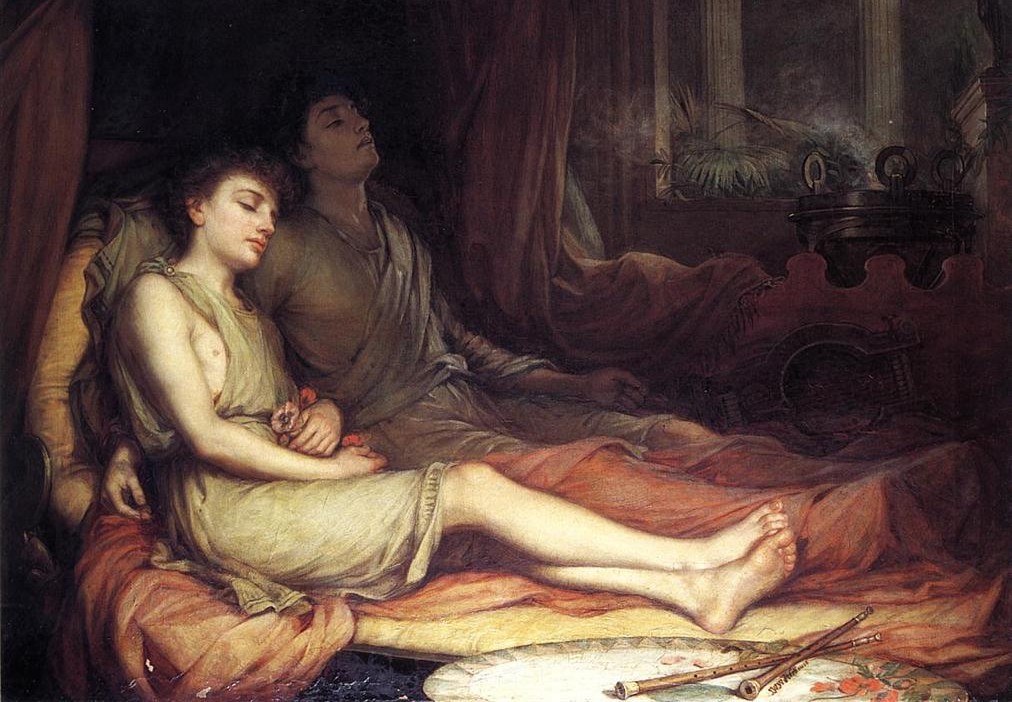
Painting “Sleep and His Half Brother Death” by John William Waterhouse
Question for Quote Investigator: U.S. novelist Ernest Hemingway has been credited with the following fatalistic remark:
All true stories end in death.
I have been unable to find this precise statement in Hemingway’s oeuvre. Apparently, he employed a different phrasing. Would you please help me find the correct statement together with a citation?
Reply from Quote Investigator: In 1932 Ernest Hemingway published “Death in the Afternoon” which examined Spanish bullfighting. Hemingway discussed the mating of bulls and cows. He suggested that a bull which refused to mate with multiple cows would be sent to the bullring which meant death. A woman suggested that this topic was sad. Boldface added to excerpts by QI:1
I find that a sad story, sir. Madame, all stories, if continued far enough, end in death, and he is no true-story teller who would keep that from you. Especially do all stories of monogamy end in death, and your man who is monogamous while he often lives most happily, dies in the most lonely fashion. There is no lonelier man in death, except the suicide, than that man who has lived many years with a good wife and then outlived her. If two people love each other there can be no happy end to it.
Over time, Hemingway’s quotation has been streamlined to yield the concise version. Here is an overview of this saying together with variants, dates, and attributions:
1932: Madame, all stories, if continued far enough, end in death (Ernest Hemingway)
1954: All stories end in death (Attributed to Ernest Hemingway)
1965: The best love-stories end in death (Ladislaus Boros — translated from German to English)
1966: All stories end in death (Attributed to Ernest Hemingway)
1967: All great love stories end in death (Lionel Trilling)
1971 Nov: Every true story ends in death (Attributed to Ernest Hemingway)
1971 Dec: All true stories end in death (Attributed to Ernest Hemingway)
2001: All true stories end in death (Attributed to Ernest Hemingway)
Below are details for selected citations in chronological order.
Question for Quote Investigator: Unfounded boasts are criticized, but an individual who sets and accomplishes an audacious goal can win praise. Here are three versions of a pertinent saying:
(1) It ain’t bragging if you can do it. (2) It ain’t bragging when you can do it. (3) It ain’t bragging if it’s true.
This saying has been attributed to three baseball players: Dizzy Dean. Reggie Jackson, and Babe Ruth. It has also been credited to two boxers: Muhammad Ali and Sonny Liston. Would you please explore this topic?
Reply from Quote Investigator: U.S. professional baseball pitcher Jay Hanna Dean was known by his nickname Dizzy Dean. In 1934 he published an article in several newspapers which discussed bragging. Dean communicated the central idea of the saying, but he employed a different phrasing:1
There’s one thing about us Deans. Some people think we do a lot of bragging, but we don’t figure it’s bragging. When we say we’re good we say it because we believe it down in our hearts and I—I kinda think you could get a pretty good argument out of Mickey Cochrane if you tried to tell him that we weren’t so hot as pitchers.
What I started to say, though, was that we don’t brag. Whenever we say we’re going to do something we go out and do it.
Dizzy Dean’s extraordinary pitching performance helped his team, the St. Louis Cardinals, win the National League pennant and the World Series in 1934. QI believes that Dean’s essay was condensed and paraphrased over time to yield the sayings attributed to Dean. Below is an overview showing the evolution of the phrase together with dates and attributions.
1934: We don’t brag. Whenever we say we’re going to do something we go out and do it. (Dizzy Dean)
1935: It’s not bragging when a fellow can back up anything he says. (Attributed to Dizzy Dean)
1943: If I can do what I say, it ain’t bragging, is it? (Attributed to Dizzy Dean)
1951: It ain’t bragging when you can back it up. (Attributed to Dizzy Dean)
1958: It ain’t bragging when you can do it. (Attributed to Dizzy Dean)
1959: It ain’t bragging if you can do it! (Attributed to Dizzy Dean)
1962: It ain’t bragging if you can do it. (Anonymous “old adage”)
1966: It ain’t bragging when you done done it. (Attributed to Dizzy Dean)
1968: If I tell the truth. It sounds like bragging. And if I don’t, I’m lying. (Sonny Liston)
1973: It ain’t bragging if you can do it. (Attributed to Muhammad Ali)
1974: It ain’t bragging if it’s true. (Attributed to Dizzy Dean)
1976: If you do it, it ain’t bragging. (A profound philosopher)
1990: It ain’t bragging when you can do it. (Attributed to Reggie Jackson)
1994: It ain’t bragging if you can do it. (Attributed to Babe Ruth)
2007: It’s not bragging if you can back it up. (Attributed to Muhammad Ali)
Below are details for selected citations in chronological order.
Emily Dickinson? Thomas Wentworth Higginson? Mabel Loomis Todd? M. Lincoln Schuster? Apocryphal?
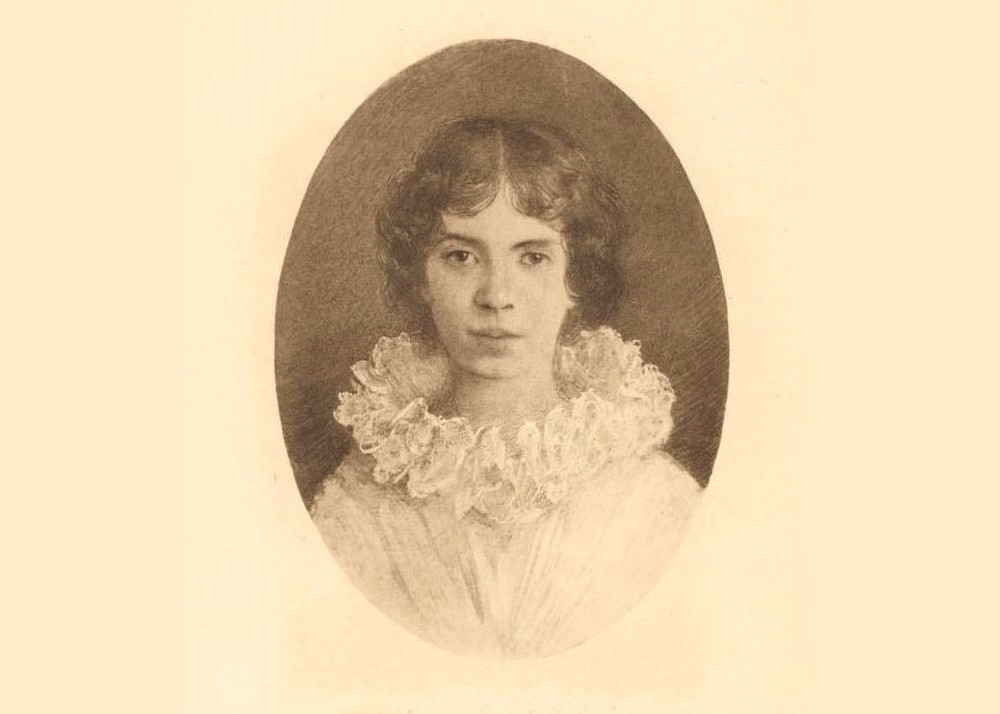
Photogravure of Emily Dickinson by artist Laura Coombs Hill
Question for Quote Investigator: A prominent literary figure was asked about her life experiences, and she responded emphatically:
I find ecstasy in living; the mere sense of living is joy enough.
This remark has been attributed to nineteenth-century poet Emily Dickinson. Some sources claim that Dickinson wrote this statement in a letter, but I cannot find that letter, and I am skeptical. Would you please help me to find a citation?
Reply from Quote Investigator: Unitarian minister Thomas Wentworth Higginson was a literary mentor to Emily Dickinson. He visited her in August 1870, and he wrote about the event in “The Atlantic Monthly” in 1891. Dickinson’s comments to Higginson indicated that her experiences in life were invigorating. The word “ecstasy” was spelled as “ecstacy” in the following excerpt from the magazine text:1
She went on talking constantly and saying, in the midst of narrative, things quaint and aphoristic. “Is it oblivion or absorption when things pass from our minds?” “Truth is such a rare thing, it is delightful to tell it.” “I find ecstacy in living; the mere sense of living is joy enough.”
Dickinson told Higginson about her method for recognizing poetry:
“If I read a book and it makes my whole body so cold no fire can ever warm me, I know that is poetry. If I feel physically as if the top of my head were taken off, I know that is poetry. These are the only ways I know it. Is there any other way?”
Below are additional selected citations in chronological order.
Joseph P. Kennedy Sr.? Bernard Baruch? Joseph F. Dinneen? Apocryphal?
Stock Ticker
Question for Quote Investigator: Prescient investors pulled their money out of the U.S. stock market shortly before the crash of 1929. According to a Wall Street legend, a financier who received a stock tip from a shoeshine boy experienced the following epiphany:
When a shoeshine boy knows as much as I do about the stock market it’s time for me to get out.
I do not know the exact phrasing of this quotation, and this tale might be apocryphal. The story has been attributed to U.S. businessman Joseph P. Kennedy Sr. and U.S. financier Bernard Baruch. Would you please explore this topic?
Reply from Quote Investigator: The earliest match known to QI appeared in the 1959 book “The Kennedy Family” by journalist Joseph F. Dinneen. The book asserted that Joseph P. Kennedy Sr. started removing his money from the U.S. stock market in August 1929.
Kennedy did not fully explain his behavior at that time. The stock market catastrophically crashed in October 1929. Time passed, and a newsperson inquired about Kennedy’s foresight:1
“How did that come about, Joe?” a reporter asked him years later.
“Very simply,” he said. “I dropped in at a shoeshine parlor on Wall Street. The boy who shined my shoes did not know me. He wasn’t fishing for information or looking for a market tip. He was the average wage earner or salaried employee playing the market like everybody else in that day. He looked up at me as he snapped the cloth over my shoes and told me what was going to happen to various stocks and offerings on the market that day.
“I listened as I looked down at him, and when I left the place I thought: ‘When a time comes that a shoeshine boy knows as much as I do about what is going on in the stock market, tells me so and is entirely correct, there is something the matter either with me or with the market and it’s time for me to get out,’ and I did.”
The author Joseph F. Dinneen was a long-time reporter for “The Boston Globe” of Massachusetts. Dinneen did not indicate when Kennedy delivered his explanation. Also, Dinneen did not specify the name of the reporter to whom Kennedy spoke. Perhaps it was Dinneen himself. The thirty-year delay between the crash and the publication of Dinneen’s book was substantial.
Below are additional selected citations in chronological order.
Theater masks depicting Comedy and Tragedy from Pixabay
Question for Quote Investigator: The true character of a person cannot be hidden for a lengthy period behind a mask of deception. Here are two versions of a pertinent saying:
(1) When people show you who they are, believe them the first time. (2) When someone shows you who they are the first time, believe them.
This notion has been attributed to writer Maya Angelou and entrepreneur Oprah Winfrey. Would you please explore this topic?
Reply from Quote Investigator: The earliest match found by QI occurred in a commencement address delivered by Oprah Winfrey at Wellesley College in Massachusetts in May 1997. Winfrey credited the expression to Maya Angelou. Winfrey spoke about relationships in the following passage from her speech. Boldface added to excerpts by QI:1
One of the other great lessons I learned taught to me by my friend and mentor, Maya Angelou and if you can get this, you can save yourself a lot of time … Remember this because this will happen many times in your life.
When people show you who they are, believe them, the first time. Not the 29th time! That is particularly good when it comes to men situations because when he doesn’t call back the first time, when you are mistreated the first time, when you see someone who shows you a lack of integrity or dishonesty the first time, know that that will be followed by many, many, many other times that will at some point in life come back to haunt or hurt you. When people show you who they are, believe them, the first time. Live your life from truth and you will survive everything, everything, I believe even death.
Below are additional selected citations in chronological order.
John James Audubon? Joseph Cornell? Patricia Holt? Jack Barclay? Birdwatcher’s Proverb? Jack Kornfield? Anonymous?
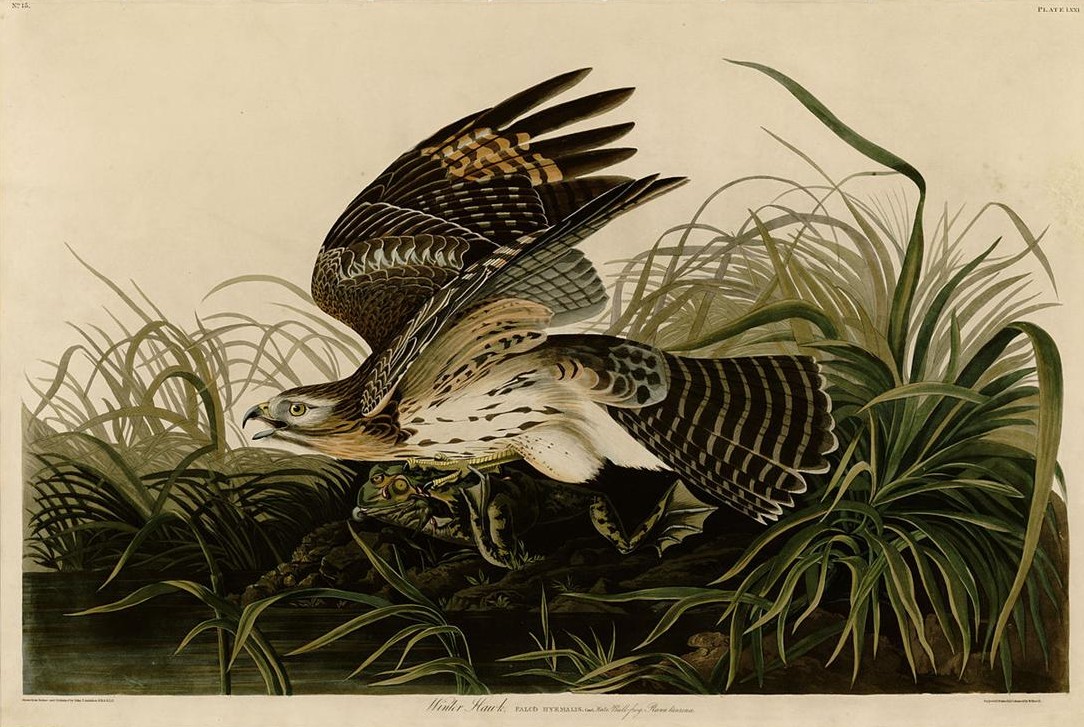
Illustration of a Winter Hawk by John James Audubon
Question for Quote Investigator: Much of our knowledge is obtained indirectly through reference books and instruction manuals. Yet, direct observation provides a more accurate guide. Here is pertinent saying from the domain of ornithology:
When the bird and the book disagree, always believe the bird.
This statement has been attributed to the prominent artist and naturalist John James Audubon, but I have not seen a solid citation, and I am skeptical. Would you please explore the provenance of this expression?
Reply from Quote Investigator: QI has not found any substantive evidence supporting the ascription to John James Audubon who died in 1851.
The earliest match found by QI appeared in the 1987 book “Listening to Nature: How to Deepen Your Awareness of Nature” by Joseph Cornell. The saying appeared as an epigram for section fifteen. Boldface added to excerpts by QI:1
“When the bird and the book disagree, always believe the bird.” —Birdwatcher’s Proverb
Thus, Joseph Cornell helped to popularize this saying, but the originator remains anonymous.
Below are additional selected citations in chronological order.
Thich Nhat Hanh? Sylvia Boorstein? Peg Bracken? Ollie Crawford? George D. Ludcke? Anonymous?
Mary Cassatt’s painting of “Little Girl in a Blue Armchair”
Question for Quote Investigator: Humorous sayings can be created by ingeniously transforming mundane expressions. Most people are familiar with the entreaty:
Don’t just sit there, do something.
However, the following reordered sentence indicates that inaction is often desirable:
Don’t just do something, sit there.
This saying has been attributed to Vietnamese Buddhist monk Thich Nhat Hanh, U.S. psychotherapist Sylvia Boorstein, and others. Would you please explore this topic?
Reply from Quote Investigator: The earliest close match found by QI appeared in August 1954 within a news article by Ollie Crawford in “The Philadelphia Inquirer” of Pennsylvania. Crawford discussed a proposal to build radar warning platforms at sea. The platforms would be up to 125 miles away from land, and anyone stationed on such a distant platform would be lonely. Boldface added to excerpts by QI:1
Their orders will be: “Don’t just do something. Sit there.”
The statement above is a variant of an older quip using the word “stand” instead of “sit”. The first close match for this older expression appeared in the popular syndicated gossip column of Leonard Lyons in 1945. The quip was used by an actor and producer named Martin Gabel:2
At the first rehearsal of Irwin Shaw’s play, “The Assassin,” Producer Martin Gabel noticed a young actress gesticulating wildly instead of remaining motionless. Gabel shouted: “Don’t just do something; stand there.”
A separate Quote Investigator article about the phrase using the word “stand” is available here.
Here are additional selected citations in chronological order.
John Ruskin? Douglas Adams? Sydney J. Harris? Paul Harvey? Stanisław Jerzy Lec? Anonymous?
Raindrops striking a water surface from Unsplash
Question for Quote Investigator: A group that acts in unison can cause enormous positive or negative changes. Each member of a group typically celebrates favorable developments but disavows adverse events. Here are three versions of a pertinent metaphorical adage:
(1) No single raindrop believes it is to blame for the flood. (2) A single raindrop never feels responsible for the flood. (3) No individual raindrop ever considers itself responsible for the flood.
This saying has been attributed to English writer John Ruskin, English humorist Douglas Adams, and U.S. journalist Sydney J. Harris. Would you please explore this topic?
Reply from Quote Investigator: The earliest match found by QI appeared in the syndicated newspaper column of Sydney J. Harris in 1977. The article consisted of a series of miscellaneous thoughts such as these three items:1
One of the dozen most frequently misspelled words (even in learned works) is “minuscule,” usually spelled “miniscule.”
No individual raindrop ever considers itself to be responsible for the flood.
What science smugly calls “natural laws” are really only partial observations: No doubt the house fly thinks of the swatter as a natural law.
Based on this citation, Sydney J. Harris is the leading candidate for creator of this saying; however, the central idea appeared more than a decade earlier embodied in a different metaphorical framework.
In September 1963 “Holiday” magazine of Pennsylvania printed a collection of sayings from the Polish satirist Stanisław Jerzy Lec. The sayings had been translated by Jacek M. Galazka. This item was included:2
No snowflake in an avalanche ever feels responsible.
A separate QI article about the snowflake saying is available here.
Below are additional selected citations in chronological order.