Quote Origin: Misquotation Is the Pride and Privilege of the Learned

Hesketh Pearson? Stephen Gwynn? Lord Byron? Apocryphal?
Question for Quote Investigator: The human brain is not designed to precisely remember quotations. Unintentionally paraphrasing or altering quotations is common. A popular writer once suggested that misquotations were the pride and privilege of the learned. Unsurprisingly, I do not remember the precise phrasing of this remark. Would you please help me to trace this expression?

Reply from Quote Investigator: The English writer Hesketh Pearson was a popular biographer. He wrote works about George Bernard Shaw, Arthur Conan Doyle, Oscar Wilde, Charles Dickens, and many others. In 1934 he published “Common Misquotations” which contained the following passage in the introduction. Boldface added to excerpts by QI:1

Misquotation is, in fact, the pride and privilege of the learned. A widely-read man never quotes accurately, for the rather obvious reason that he has read too widely. He can retain the thought, but seldom the structure, of a phrase. There are exceptions, of course—Dr. Johnson for one—but it is broadly true to say that a person who wanders throughout the domain of literature cannot remember in detail any particular part of it.

QI believes that Pearson’s observation may have been true in 1934, but it is now incomplete. There are many reference tools currently available to facilitate the use of accurate quotations such as Wikiquote, “The New Yale Book of Quotations”, ‘Oxford Dictionary of Quotations”, “Brewer’s Famous Quotations”, the Google Books database, and the Quote Investigator website. Also, reference tools in digital format are electronically searchable. Using genuine quotations with accurate attributions helps to reduce the spread of misquotations.

Below are additional selected citations in chronological order.

Continue reading “Quote Origin: Misquotation Is the Pride and Privilege of the Learned”

Adage Origin: Inside Every Fat Person is a Thin Person Trying to Get Out

George Orwell? Cyril Connolly? Margaret Marshall? Kingsley Amis? Kit Reed? Anonymous?

Matryoshka dolls from Unsplash

Question for Quote Investigator: Societal attitudes toward body weight and body image have changed, and this topic can be controversial. I recall the following adage from decades in the past:

Inside every fat person is a slim one who wants to get out.

I do not remember the precise phrasing. This notion has been attributed to English novelist George Orwell and English literary critic Cyril Connolly. Would you please explore this topic?

Reply from Quote Investigator: A passage containing a partial match occurred in the 1939 novel “Coming Up for Air” by George Orwell. Boldface added to excerpts by QI:1

I’m fat, but I’m thin inside. Has it ever struck you that there’s a thin man inside every fat man, just as they say there’s a statue inside every block of stone?

In 1944 Cyril Connolly published “The Unquiet Grave” which included the following short item:2

Imprisoned in every fat man a thin one is wildly signalling to be let out.

Below are additional selected citations in chronological order.

Continue reading “Adage Origin: Inside Every Fat Person is a Thin Person Trying to Get Out”

Origin of Investor Proverb: Buy When There Is Blood in the Streets

Baron Rothschild? Anselm Rothschild? Nathan Mayer Rothschild? Lionel de Rothschild? Bernard Baruch? John D. Rockefeller? Apocryphal?

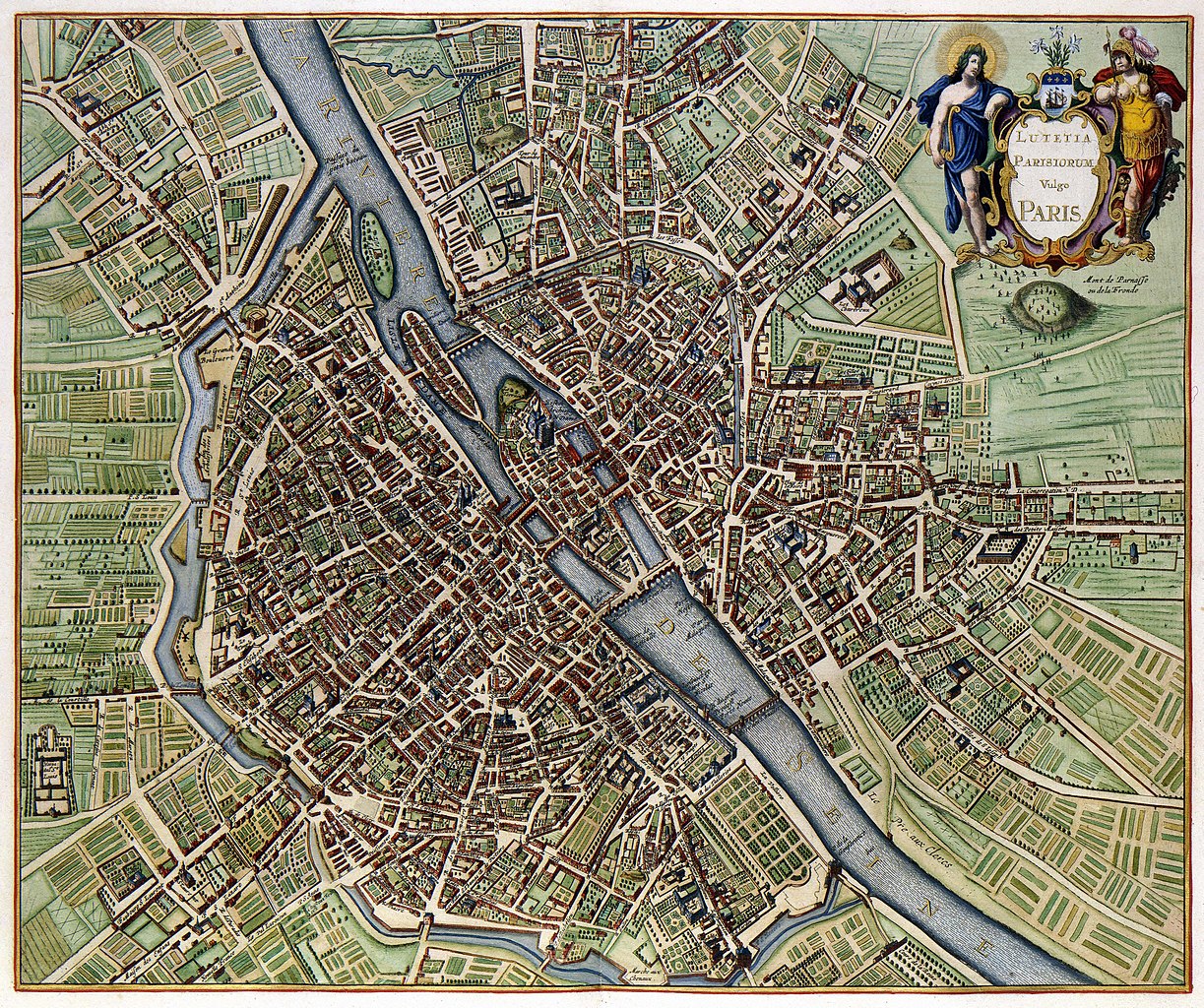
Historical map of Paris

Question for Quote Investigator: Societal chaos and violence is frightening to investors. Uncertainty depresses the prices of securities. Yet, a popular adage highlights the presence of opportunity:

Buy when blood is running in the streets.

This guideline makes sense if property rights are maintained and the market recovers. This statement has been credited to a member of the Rothschild family of bankers. A more elaborate version states:

You must buy when blood is running on the streets — even when it’s your own.

Would you please explore this topic?

Reply from Quote Investigator: The earliest match found by QI appeared in “The Globe” newspaper of Toronto, Canada on December 29, 1893. The following passage referred to “rentes” which were bonds issued by the government of France. Boldface added to excerpts by QI:1

A French investor at a critical time was advised by one of the Rothschilds to buy rentes.

“What!” he cried. “Buy Government securities while the streets of the capital are running with blood?”

“My friend,” was the reply, “if the streets were not running with blood you couldn’t buy rentes at present prices.”

The passage did not precisely identify the member of the Rothschild family who offered the advice. Also, the historical event that precipitated the violence was not specified.

This early anecdote did not directly present a compact proverb. The statement above which was similar to the modern proverb, was formulated as a question not an adage. Nevertheless, over time this anecdote evolved to yield the proverb.

Below are additional selected citations in chronological order.

Continue reading “Origin of Investor Proverb: Buy When There Is Blood in the Streets”

Catchphrase Origin: Can a Duck Swim?

Thomas Otway? Thomas Brand? George Colman? Theodore Hook? Anonymous?

Picture of a duck paddling from Unsplash

Question for Quote Investigator: When the answer to a question is obviously affirmative the respondent can employ a rhetorical phrase from a family that includes these three examples:

Is water wet?
Is the Pope a Catholic?
Can a duck swim?

Apparently, these types of catchphrases have been circulating for many decades. The “duck” phrase seems particularly old. Would you please explore its provenance?

Reply from Quote Investigator: There are diverse ways to express this interrogative. Here are five examples:

Will a duck swim?
Can a duck swim?
Would a duck swim?
Does a duck swim?
Could a duck swim?

The earliest match known to QI occurred in a play published in 1680 titled “The History and Fall of Caius Marius: A Tragedy” by English dramatist Thomas Otway. In the following dialogue the character Lavin was hoping to rendezvous with the character Marius. Boldface added to excepts by QI:1

Lavin. Nay, prithee be not angry, Nurse; I meant No ill. Speak kindly, will my Marius come?

Nurse. Will he? will a Duck swim?

Lavin. Then he will come.

Nurse. Come? why, he will come upon all four, but he’ll come. Go, get you in, and say your Prayers: go.

Below are additional selected citations in chronological order.

Continue reading “Catchphrase Origin: Can a Duck Swim?”

Catchphrase Origin: Does a Chicken Have Lips?

Wesly Brogdon? Dea Reed? Kareem Abdul-Jabbar? Bobby Foster? Dean Martin? Anonymous?

Picture of a chicken from Unsplash

Question for Quote Investigator: When the answer to a question is obviously affirmative the respondent can employ a rhetorical phrase from a family that includes these three examples:

Is water wet?
Can birds fly?
Is the Pope a Catholic?

When the answer is obviously negative the respondent can employ one of these phrases:

Is Billy Graham Catholic?
Does a chicken have lips?

The answer to these two questions is clearly no. Billy Graham was a Southern Baptist minister. Chickens have beaks instead of lips.

Oddly, the latter phrase is now ambiguous. Some people believe it means “obviously, no”, and other people believe it means “obviously, yes”. Would you please explore the history of this expression?

Reply from Quote Investigator: The earliest match known to QI appeared in 1963 within the yearbook of a high school in Arvin, California. A student selected the statement to appear as his personal catchphrase. Unfortunately, the limited context did not delineate the meaning: 1

BROGDON, WESLY — 2. Track, Football. 4. Ratty cars. 6. “Does a chicken have lips.”

In July 1965 a version of the phrase appeared in “The Washington Daily News” of Washington D.C. within an article about a high school basketball match. A coach emphasized the upbeat aspects of the competition, and a spectator disagreed by using a sarcastic instance of the phrase:2

… “Actually this league is only for learning basketball and for letting the kids have fun. That’s all.”

That’s what Wootten said. But when a spectator heard it, he didn’t quite agree. “Sure, sure” said the spectator, “and a chicken has lips.”

Below are additional selected citations in chronological order.

Continue reading “Catchphrase Origin: Does a Chicken Have Lips?”

Proverb Origin: A Bayonet Is a Weapon with a Worker at Each End

John Maclean? James Hudson? James Riley? H. L. Mencken? Anonymous?

Illustration of a rifle with a bayonet from Pixabay

Question for Quote Investigator: Warring countries enlist workers to fight battles. Pacifists have adopted the following slogan. Here are three versions:

(1) A bayonet is a weapon with a working man at either end.
(2) A bayonet is a weapon with a worker at each end.
(3) A bayonet is a weapon with a worker at both ends.

This saying has been attributed to Scottish socialist John Maclean and English politician James Hudson. Would you please explore the provenance of this slogan?

Reply from Quote Investigator: The earliest match found by QI appeared in a March 10, 1939 article by pacifist James Hudson published in the periodical “Peace News” of London. Boldface added to excerpts by QI:1

In war, one defends neither democracy nor the workers. A bayonet is a weapon with a worker at each end.

Based in current evidence, James Hudson is the leading candidate for creator of this saying.

The evidence supporting the attribution to John Maclean is very weak because he died in 1923, and he implausibly received credit decades after his death.

Below are additional selected citations in chronological order.

Continue reading “Proverb Origin: A Bayonet Is a Weapon with a Worker at Each End”

Catchphrase Origin: Is the Pope Catholic?

Carol Burnett? Charles Constantine Pise? Jim Furlong? Jim Obert? Art Lewis? Anonymous?

View of St. Peter’s Basilica by Giovanni Battista Piranesi

Question for Quote Investigator: When the answer to a question is obviously affirmative the respondent can employ the following rhetorical phrase:

Is the Pope Catholic?
Is the Pope a Catholic?

This reply suggests that the original question was ridiculous, but the insult is leavened with humor. Would you please explore the provenance of this remark?

Reply from Quote Investigator: Scholar Charles Clay Doyle calls this phrase a sarcastic interrogative, and he mentions other phrases in this family such as “Is water wet?”, “Can birds fly?”, and “Is the sky blue?”.1 The wonderful website “Green’s Dictionary of Slang” lists several examples together with citations.2

The earliest match for the target phrase with the desired sense found by QI appeared in August 1952 within a San Antonio, Texas newspaper. An article about adventurer Jim Furlong described his journey sailing halfway around the world in a small sailing boat. Unfortunately, he suffered an accident that damaged his foot. Furlong was asked about his experience:3

Would he do it all over again?
“Is the Pope a Catholic,” grinned Furlong. “Sure I would. I’m already planning my next trip — and it’s going to be the biggest yet.”

QI has found the phrase “Is the Pope Catholic?” in print many years before 1952, but these earlier instances were not used as sarcastic interrogatives.

Below are additional selected citations in chronological order.

Continue reading “Catchphrase Origin: Is the Pope Catholic?”

Dialogue Origin: “You Look As If There Is a Famine in the Land” “You Look As If You Are the Cause of It”

George Bernard Shaw? G. K. Chesterton? Alfred Hitchcock? Lord Northcliffe? Alfred Harmsworth? Apocryphal?

Abstract artwork representing two different shapes from Unsplash

Question for Quote Investigator: A slim person and a portly person engaged in the following sharp exchange:

“You look as if there were famine in the land.”
“You look as if you were the cause of it.”

The participants in this anecdote and the precise phrasing of the dialogue varies. Typically, the skinny person was the famous Irish playwright George Bernard Shaw. The rotund person was one of three possibilities: English author G. K. Chesterton, English filmmaker Alfred Hitchcock, or British publishing magnate Lord Northcliffe. Would you please explore the provenance of this anecdote?

Reply from Quote Investigator: This tale is difficult to trace because of its variability. The earliest match found by QI appeared in a newspaper in Decatur, Alabama on August 10, 1931. Boldface added to excepts by QI:1

A fat man and a thin man were having an argument.
“From the looks of you,” said the fat man, “there must have been a famine when you were born.”
“And from the looks of you,” replied the thin man, “you must have caused it.”

The earliest instances did not mention any specific individuals. QI conjectures that the anecdote began as a joke with unnamed archetypal participants. To heighten the humor the two roles were later assigned to well-known pairs of individuals who were slender and plump. Hence, QI hypothesizes that the anecdotes featuring George Bernard Shaw were all fictitious. However, it remains possible that the anecdote was genuine, and the names were initially hidden.

Below are additional selected citations in chronological order.

Continue reading “Dialogue Origin: “You Look As If There Is a Famine in the Land” “You Look As If You Are the Cause of It””

Proverb Origin: Inside Every Old Person There Is a Young Person Wondering What Happened

Terry Pratchett? Ashleigh Brilliant? Cora Harvey Armstrong? Dan Sullivan? Hal Roach? Barbara Johnson? Anonymous?

Silhouette image of an old person and a young person from Unsplash

Question for Quote Investigator: An individual who feels young at heart sometimes looks in the mirror and is surprised to find an old person staring back. The years pass surprisingly rapidly. Here is a germane saying:

Inside every older person there’s a younger person wondering what happened.

This statement has been attributed to British fantasist Terry Pratchett and U.S. aphorist Ashleigh Brilliant. Would you please explore the provenance of this expression?

Reply from Quote Investigator: The earliest close match known to QI appeared in the “Los Angeles Times” of California in August 1976. Journalist Dan Sullivan wrote about the Los Angeles Mask Theater which consisted of a troupe of actors and artisans in their mid-20s. The character Sylvia was played by a young actress wearing a mask depicting the face of an elderly woman. Boldface added to excerpts by QI:1

But talking with Sylvia on the bench, one did feel a species of archetype and magic. There was the reality of the old lady at your elbow and there was the reality of the actress playing her, the mask serving as a kind of bridge between them. If you looked through the eyeholes, you saw that Sylvia had very young eyes, and it almost seemed a reminder that inside every old person there is a young one wondering what happened.

Based on this citation, QI believes Dan Sullivan is the leading candidate for creator of this saying. Ashleigh Brilliant and Terry Pratchett both used the expression after it was already in circulation.

Below are additional selected citations in chronological order.

Continue reading “Proverb Origin: Inside Every Old Person There Is a Young Person Wondering What Happened”

Proverb Origin: You Cannot Awaken Someone Who Is Pretending To Sleep

Mohandas Gandhi? Jonathan Safran Foer? B. N. Misra? T. S. A. Chettiar? Hakim Sanai? Yoruba Proverb? Navajo Proverb? Oromo Proverb? Anonymous?

Depiction of a mannequin with a blindfold from Unsplash

Question for Quote Investigator: Some people deliberately refuse to acknowledge unwelcome facts or events. They may pretend to misunderstand information, or they may simply ignore it. Here is a pertinent figurative expression:

You can’t wake up someone who is pretending to be asleep.

This saying has been attributed to Indian leader Mahatma Gandhi and U.S. author Jonathan Safran Foer. Also, the statement has been labeled a Navajo proverb and a Yoruba proverb. Would you please explore this topic?

Reply from Quote Investigator: Mohandas Gandhi did employ a version of this proverb in his autobiography, but he was not the originator. Tracing this proverb is difficult because it can be expressed in numerous ways. Here is an overview showing selected published items together with dates and attributions:

1871: Difficult to awaken people who will close their eyes and determine to sleep on (Unnamed journalist in “The Family Herald” of London)

1888: It is, therefore, mere waste of energy to awaken one, who is wide-awake, but only feigns sleep (Unnamed journalist in “Amrita Bazar Patrika” of Calcutta, India)

1910: To awaken a sleeper is easy, but the heedless is like one dead (English translation from “The Walled Garden of Truth” by Hakim Sanai)

1928: You can wake a man only if he is really asleep; no effort that you may make will produce any effect upon him if he is merely pretending sleep (Mohandas Gandhi in his autobiography)

1932: You can awake one who is really asleep but you cannot awake one who pretends to sleep (B. N. Misra in the Legislative Assembly of India)

1953: People who are sleeping can be awakened but people who are awake and who pretend to be sleeping cannot be awakened (T. S. A. Chettiar in Lok Sabha Debates, India)

1966: You can wake up a sleeping man, but you cannot wake up those who are already awake (U. M. Trivedi in Lok Sabha Debates, India)

1972: It is easy to awaken a sleeping man but not one who pretends to sleep (R. C. Majumdar in “The Calcutta Review”)

1988: One wakes a sleeper; one does not wake a pretender (Yoruba proverb)

1988: You can’t wake a person who is pretending to sleep (Oromo proverb)

1993: You cannot wake up a man who is pretending to be asleep (Saying in Somalia)

1998: You can’t wake a person who is pretending to be asleep (Described as a Navajo proverb)

2009: It’s always possible to wake someone from sleep, but no amount of noise will wake someone who is pretending to be asleep (Jonathan Safran Foer in “Eating Animals”)

Below are details for selected citations in chronological order.

Continue reading “Proverb Origin: You Cannot Awaken Someone Who Is Pretending To Sleep”